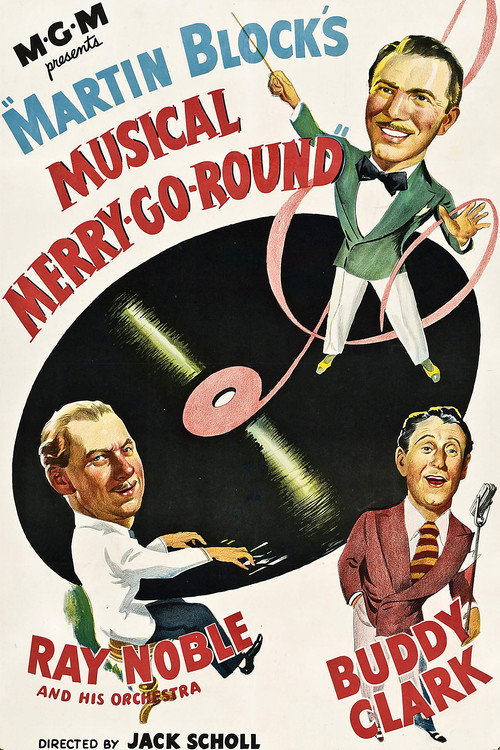
Martin Block's Musical Merry-Go-Round No. 2
1948
No user ratings available yet
Representation score: 0.6 out of 10
Representation Score
Minimal
1948
ApprovedDirector
Jack Scholl
Runtime
11 minutes
Average Rating
No ratings yetNew Showbiz Analysis
This 1948 musical showcase serves as a time capsule of mid-century American media. It centers on the professional celebrity of disc jockey Martin Block, highlighting the reach and influence of radio during its peak popularity. The film lacks complexity in representing diverse identities and social structures, reflecting the demographic homogeneity typical of the era. While it captures a significant moment in broadcast history, it offers little representation of underrepresented groups or social subversion. Ultimately, the production functions as a celebratory document of mainstream Western culture, maintaining a traditionalist framework that aligns with the social norms of the late 1940s.
Category Breakdown
There are no LGBTQ+ characters or non-cisgender identities in the film. The focus is on professional radio broadcasting and musical performances.
A female listener daydreams but remains a passive consumer. The story centers on the male DJ and his male guest.
The film reflects the racial homogeneity of 1940s radio. There is no mention of a multi-ethnic cast or diverse racial identities.
The movie celebrates mid-century American media culture and Western musical traditions. It upholds traditional social hierarchies and media structures.
No visible or invisible disabilities are shown. The characters depicted have standard physical and neurotypical abilities.
Present on Screen
Limited or Absent
Official Synopsis
We visit Martin Block at his studio desk at 11:30 AM at the height of his popularity as a disk jockey, when more than 400 radio stations carried his show. Block opens the show with Freddie Martin's first big hit, "Tonight We Love," an adaption of a Tchaikovsky piano concerto; he dedicates it to a listener in Wyoming, and we see her daydreaming as she listens. Then Keenan Wynn stops in for a chat, asking Block about being a DJ. Between bits of conversation with Wynn, Block plays three more Martin records, including "Cumana," and we see the band in action.
1948
1948
1948
1948
1947
1947
1938
1948
No reviews yet. Be the first to share your thoughts on this movie!
Use the rating form above to leave a star rating and optional review.