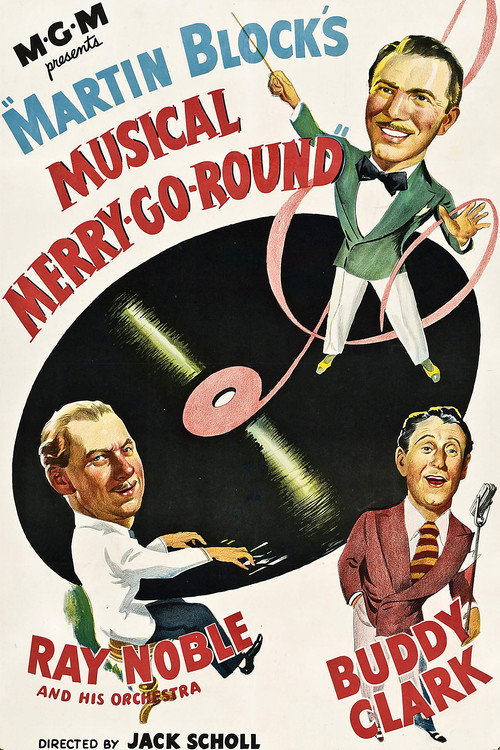
Martin Block's Musical Merry-Go-Round No. 5
1948
No user ratings available yet
Diversity score: 1.4 out of 10
No Poster Available
1947
ApprovedDirector
Jack Scholl
Runtime
10 minutes
Average Rating
No ratings yetSynopsis
A brief history of Stan Kenton's musical career from taxi-dance gigs to his successful big band orchestra.
Overall Score
Minimal
Category Breakdown
LGBTQ+ Representation
The film focuses exclusively on the musical progression of the ensemble. There are no narratives addressing non-cisnormative identities or heteronormativity.
Gender Representation
The narrative centers on the male bandleader and his male musicians. This reinforces the traditional gendered professional hierarchies common in mid-century big band performances.
Racial & Ethnic Diversity
The film documents a white-led orchestra within the segregated professional landscapes of 1947. It lacks evidence of intentional intersectional casting despite jazz's Black American roots.
Religious & Cultural Diversity
The work celebrates American musical traditions and professional achievement. It adheres to post-war traditionalist values rather than presenting alternative cultural narratives.
Disability Representation
There is no evidence of performers with visible or invisible disabilities being integrated into the film or portrayed with agency.
Strengths
Areas for Improvement
AI Analysis
This musical documentary serves as a historical record of Stan Kenton's career, tracing his journey from taxi-dance gigs to big band success. Because it was produced in 1947, the film operates within the social constraints and traditionalist frameworks of its era. The content prioritizes the preservation of musical talent and the evolution of a specific jazz sound over social critique. Consequently, the film lacks representation of diverse identities, focusing instead on the professional trajectory of a specific musical institution. Ultimately, the film functions as a celebration of mid-century American musical achievement rather than a vehicle for social reconfiguration or the subversion of established norms.
1948
1946
1948
1948
1947
1948

1942
1935
1948
1949
1942
1946
No reviews yet. Be the first to share your thoughts on this movie!
Use the rating form above to leave a star rating and optional review.