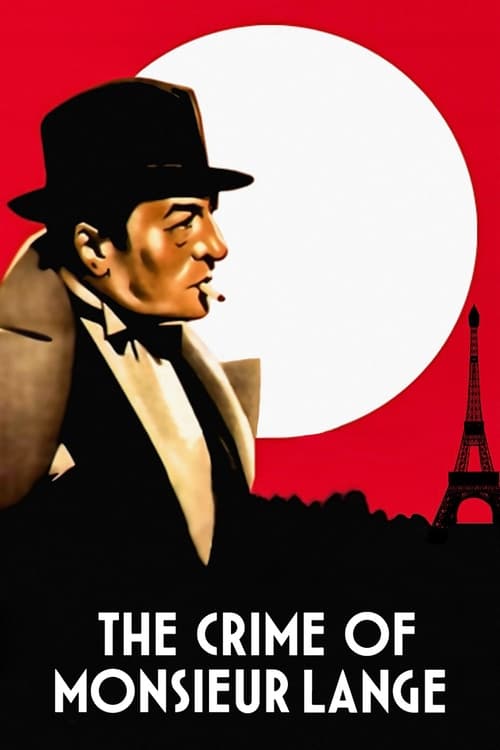
The Crime of Monsieur Lange
1936
No user ratings available yet
Representation score: 2.9 out of 10
Representation Score
Limited
1931
Not RatedDirector
Jean Renoir
Runtime
96 minutes
Average Rating
No ratings yetNew Showbiz Analysis
Jean Renoir’s work excels in its psychological complexity and its willingness to disrupt rigid social structures. The film's strength lies in its sophisticated subversion of gender hierarchies and its rejection of conventional moralizing. However, the film is limited by a lack of racial and LGBTQ+ representation. The homogeneous Parisian setting and the strictly narrow focus on straight relationships result in a narrow social scope. Ultimately, the film is a study of human impulses that trades traditional social ethics for a more relativistic and complex worldview.
Category Breakdown
The film focuses on a cycle of obsession and manipulation that assumes everyone is straight or cisgender. There are no queer subtexts or non-cisgender identities within the character arcs.
Lulu challenges era-specific expectations by taking a leading role in driving the plot through predatory social maneuvering. Maurice lacks traditional masculine leadership, as he has little control over what happens to him and his actions are driven by his devotion to Lulu.
The cast remains uniform within its Parisian urban setting. The film does not engage with racial or ethnic diversity, reflecting its 1931 production context.
The narrative rejects traditional moral redemption arcs in favor of moral relativism. It presents anti-social behavior and crime without a didactic or punitive tone.
No visible or invisible disabilities are portrayed as central to the character development or the narrative progression.
Present on Screen
Limited or Absent
Official Synopsis
Cashier Maurice Legrand is married to the wretched Adele. By chance, he meets Lucienne, 'Lulu', and makes her his mistress. He thinks he has finally found love, but Lulu is a streetwalker, still in love with her pimp.
1936

1929
1955

1949
1951

1945
1960
1924
No reviews yet. Be the first to share your thoughts on this movie!
Use the rating form above to leave a star rating and optional review.