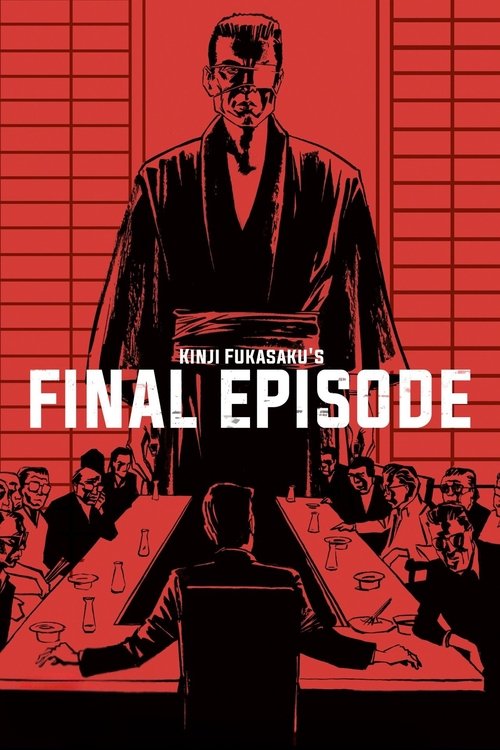
Battles Without Honor and Humanity: Final Episode
1974
No user ratings available yet
Representation score: 3.8 out of 10
Representation Score
Minimal
1973
Not RatedDirector
Kinji Fukasaku
Runtime
102 minutes
Average Rating
No ratings yetNew Showbiz Analysis
Kinji Fukasaku’s work provides a gritty, documentary-style deconstruction of Yakuza myths. While the film lacks demographic diversity, it offers a profound systemic critique of Japanese social structures and the corruption of traditional honor codes. The narrative is heavily centered on hyper-masculine hierarchies, leaving little room for gender diversity or queer identities. However, its cultural depth is significant, framing criminal struggles within the chaotic reality of post-war economic restructuring. Ultimately, the film trades traditional representation for a powerful, nihilistic analysis of power, replacing romanticized heroism with a realistic look at survival in a broken system.
Category Breakdown
The film operates within a strictly straight-centered framework, focusing entirely on male-driven power dynamics with no presence of diverse sexual orientations or gender identities.
The narrative is almost exclusively male-centric, adhering to a rigid gender hierarchy. Women are relegated to the periphery as domestic figures lacking significant roles in driving the story.
The cast is homogeneous, reflecting the specific socio-cultural context of post-war Hiroshima. It focuses on internal Japanese social stratifications without representing diverse racial or ethnic backgrounds.
The film excels by deconstructing the 'noble Yakuza' cliché. It replaces myths of honor with a nihilistic reality, critiquing corrupt traditional and capitalist structures.
There are no significant depictions of visible or invisible disabilities. Characters are defined solely by their physical capacity for violence and survival.
Present on Screen
Limited or Absent
Official Synopsis
Shozo Hirono has managed to separate from the Yamamori family and create his own small family, and extend his circle of acquaintances. These new friendships include a powerful underboss of the Muraoka family, Noboru Uchimoto.
1974
1973
1974
2017
1973
1976
1974
1975
No reviews yet. Be the first to share your thoughts on this movie!
Use the rating form above to leave a star rating and optional review.