
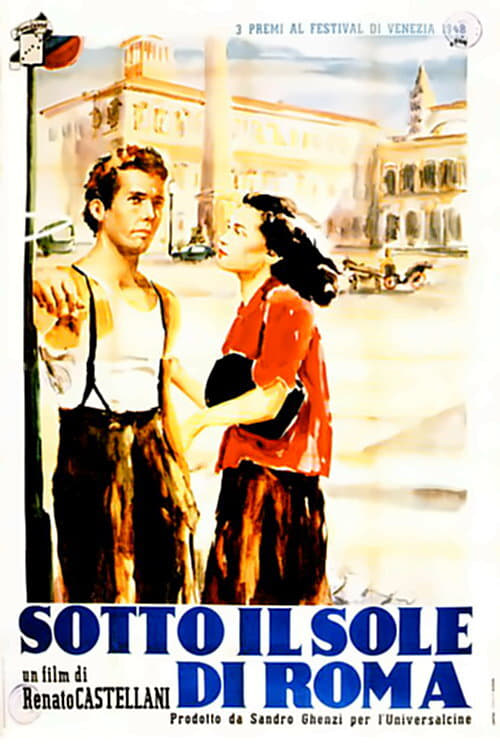
Sunday in August
1950
No user ratings available yet
Representation score: 1.2 out of 10
Representation Score
Fair
1948
Director
Renato Castellani
Runtime
95 minutes
Average Rating
No ratings yetNew Showbiz Analysis
Renato Castellani’s film offers a humanistic perspective on the working class, moving away from grand historical narratives. By focusing on the youth of the San Giovanni quarter, the film captures the emergence of new social structures from the aftermath of systemic collapse. While the film does not feature modern diversity, it succeeds in its observational storytelling. It captures a specific moment of social transition in post-war Italy through the lens of adolescent life. The film’s strength lies in its ability to challenge institutional power by highlighting the ability to act of underrepresented urban youth.
Category Breakdown
The film does not include explicit LGBTQ+ characters or stories that challenge traditional heterosexual relationships. It focuses on the social dynamics of adolescents in a Roman neighborhood during a time when societal norms were strict.
The film highlights the resilience and social ability to act of young girls as they navigate life after war. This portrayal subtly challenges rigid patriarchal structures by emphasizing the intelligence and resourcefulness of females.
The cast and setting are predominantly made up of people from similar backgrounds, reflecting the demographics of post-war Italy. The film presents a localized community rather than a diverse, multicultural society.
The film effectively shows the decline of traditional authority figures. It emphasizes communal bonds among peers over rigid class hierarchies or formal educational systems.
There is no information about the portrayal of physical or cognitive disabilities in the film.
Present on Screen
Limited or Absent
Official Synopsis
A lovely, incisive portrait of adolescents in the crowded San Giovanni quarter of Rome during the last years of WWII.
1950

1946

1946
1997
1994
1999

1947

1999
No reviews yet. Be the first to share your thoughts on this movie!
Use the rating form above to leave a star rating and optional review.