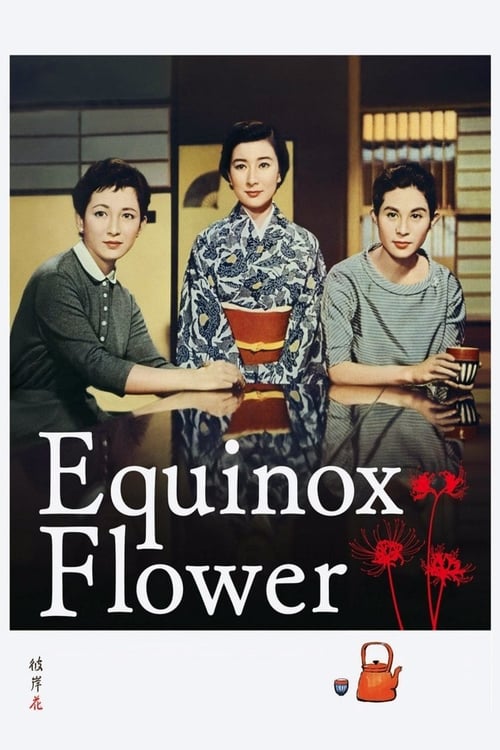
Equinox Flower
1958
No user ratings available yet
Representation score: 2.5 out of 10
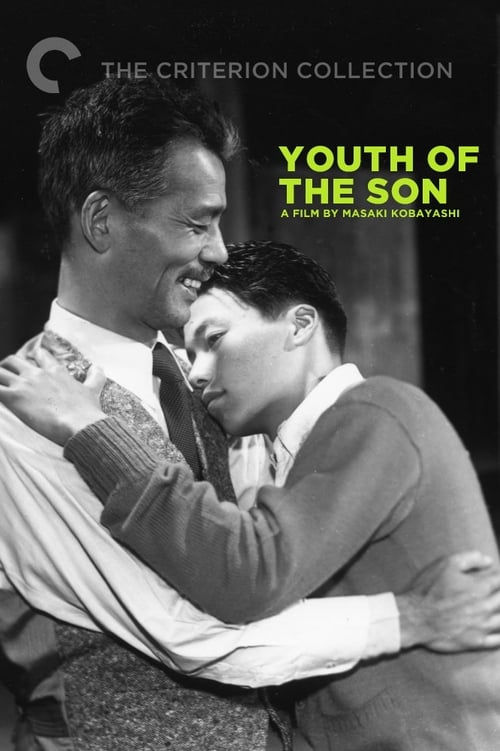
Representation Score
Fair
1952
Director
Masaki Kobayashi
Runtime
45 minutes
Average Rating
No ratings yetNew Showbiz Analysis
Masaki Kobayashi’s early work explores the changing social dynamics of post-war Japan through a character-driven narrative. The film emphasizes the internal psychological changes of its young protagonists rather than broader social critiques. While the story focuses on localized social dynamics and male-centric rivalries, it offers a valuable non-Western perspective during the 1950s. Its cultural positioning serves as a counterpoint to the prevailing Western narrative. Ultimately, the film is primarily a study of adolescent development rather than an exploration of diverse identities, adhering to the traditional frameworks of its time.
Category Breakdown
The film focuses on the romantic relationships between girls, which suggests a traditional framework centered around heterosexual relationships. There is no indication of characters exploring non-traditional gender identities or questioning the assumption that everyone is straight or cisgender.
The story revolves around teenage boys and their competitive relationships. This focus on male social hierarchies reflects a mid-century interest in masculine development and traditional gender roles.
As a Japanese production, the film presents a non-Western perspective. Although the cast appears uniform, it still adds a unique voice to the global cinematic canon, outside of the dominant Hollywood influence.
The narrative examines the tension between traditional family structures and the growing independence of the younger generation. It captures the transition from childhood to adolescence in post-war Japan.
The film does not depict any characters with physical or neurodivergent conditions.
Present on Screen
Limited or Absent
Official Synopsis
A rivalry sparks between two teenage brothers when they discover the attraction of girls.
1958
1932
1979
1980
2014
1959
1955
2005
No reviews yet. Be the first to share your thoughts on this movie!
Use the rating form above to leave a star rating and optional review.