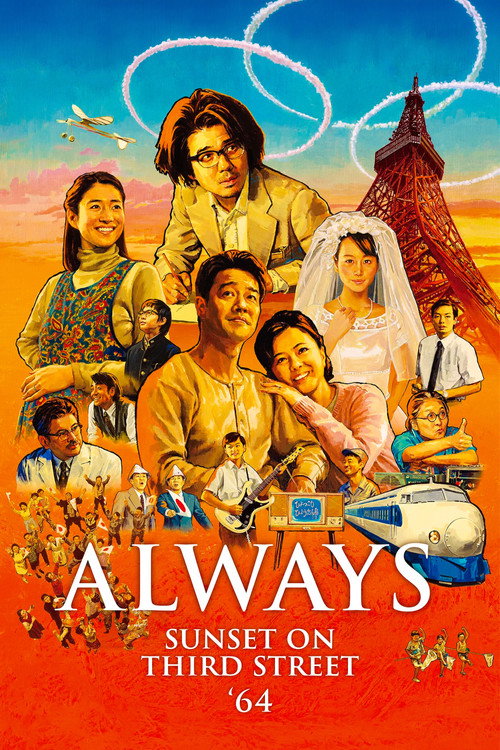
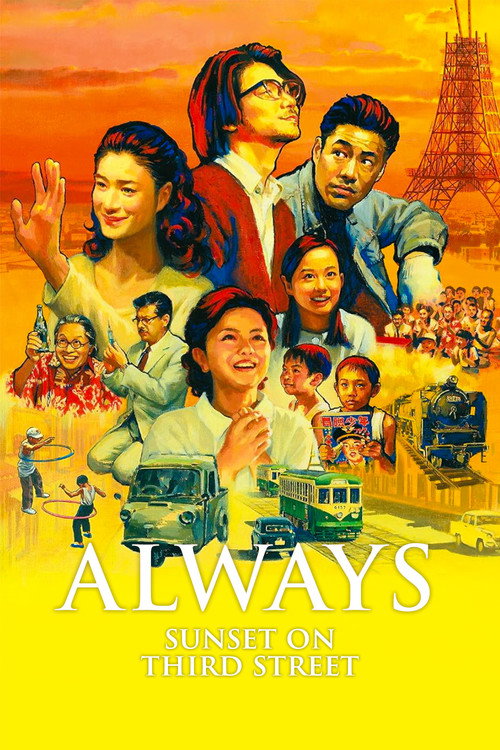
Always: Sunset on Third Street '64
2012
No user ratings available yet
Representation score: 6.0 out of 10
Representation Score
Limited
2005
Director
Takashi Yamazaki
Runtime
133 minutes
Average Rating
No ratings yetNew Showbiz Analysis
Always - Sunset on Third Street is a character-driven period drama that prioritizes historical authenticity and communal nostalgia. It captures the stability of a neighborhood unit during Japan's post-war evolution. The film provides a meaningful look at the post-war Japanese experience but lacks contemporary progressive challenges to traditional norms. It focuses on the strength of traditional social bonds rather than deconstructing them. Ultimately, the narrative structure favors the preservation of traditional institutions over the disruption of established social hierarchies.
Category Breakdown
The film focuses on interpersonal neighborhood dynamics and romantic aspirations, such as those of Junnosuke. However, there is no explicit evidence of non-traditional gender identities or narratives challenging the assumption that everyone is straight or cisgender.
Mutsuko serves as a central female protagonist navigating a changing social landscape. Her integration into a local family unit suggests a nuanced exploration of women's ability to drive the story within a traditionally patriarchal setting.
The cast depicts a culturally homogeneous Japanese community in post-war Tokyo. While it centers a non-Western experience, there is no evidence of characters reflecting multiple aspects of identity or ethnic diversity.
The narrative emphasizes community cohesion and the reconstruction of traditional Japanese social structures. It celebrates local institutions and resilience within a traditional framework rather than critiquing them.
The story contains no specific mention of characters navigating physical or neurodivergent disabilities. No character arcs involving disability are present in the narrative.
Present on Screen
Limited or Absent
Official Synopsis
In 1958 postwar Tokyo, the residents of a humble Third Street neighbourhood struggle, dream, and grow together as rapid modernisation transforms their lives beneath the shadow of the newly rising Tokyo Tower.
2012

2018
2007
1999
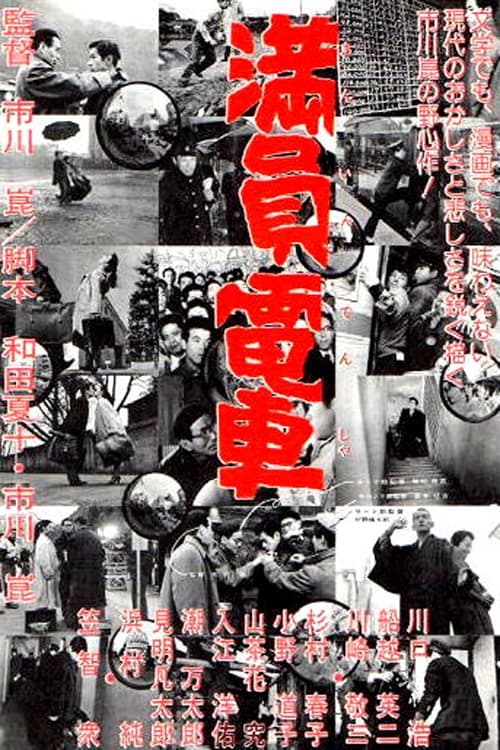
1957
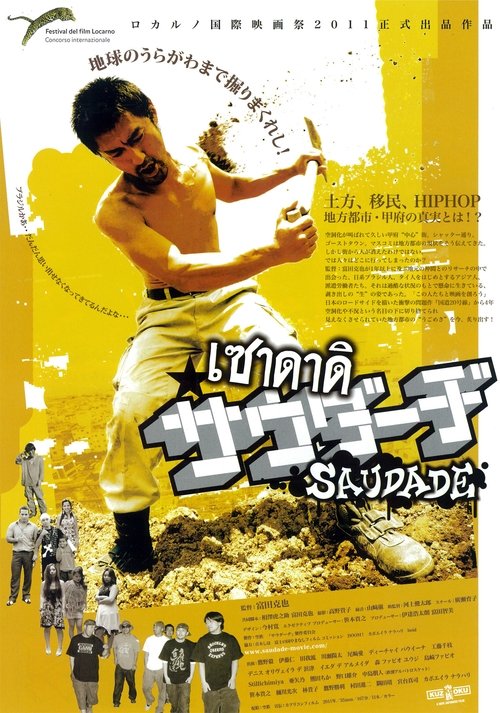
2011
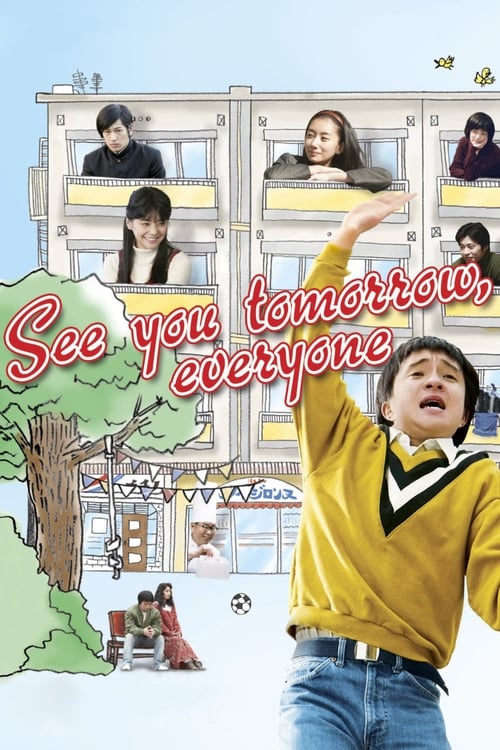
2013
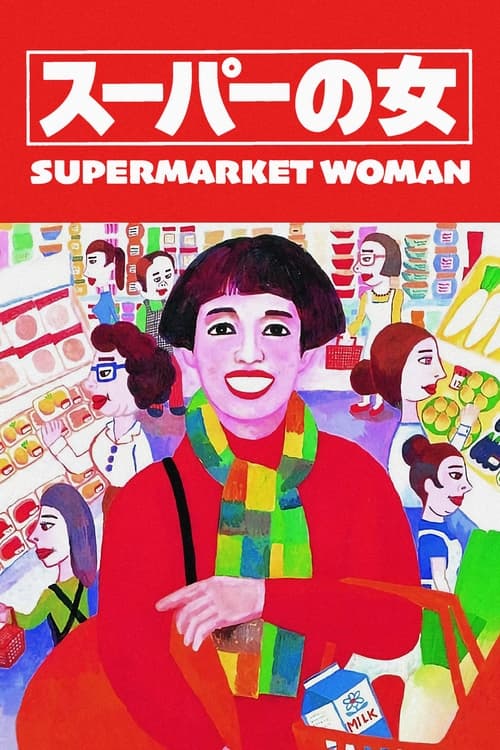
1996
No reviews yet. Be the first to share your thoughts on this movie!
Use the rating form above to leave a star rating and optional review.