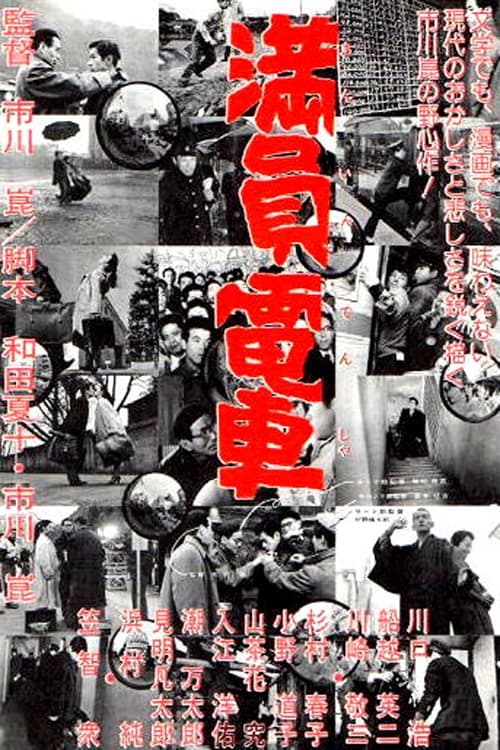
The Crowded Train
1957
No user ratings available yet
Representation score: 5.1 out of 10

Representation Score
Fair
1963
Director
Kihachi Okamoto
Runtime
103 minutes
Average Rating
No ratings yetNew Showbiz Analysis
Kihachi Okamoto’s satire offers a nuanced critique of the rigid social expectations placed on the 1960s Japanese professional class. By dismantling the 'elegant life' of a salaryman, the film challenges the performative nature of social status and corporate conformity. However, the film remains confined by the social norms of its time, focusing on masculine social performance and traditional structures. While it provides a localized social study, it does not offer significant representation for LGBTQ+ identities, diverse ethnicities, or disrupted gender power dynamics.
Category Breakdown
The film does not include any explicit references to LGBTQ+ themes or non-straight identities. The main character is a salaryman, a role traditionally associated with heterosexual family structures.
The story focuses on male-dominated professional environments and social circles. It highlights masculine social roles and public scrutiny without challenging traditional gender hierarchies or power dynamics.
As a 1963 Japanese production, the cast is ethnically uniform. The film examines urban life without featuring characters from different ethnic backgrounds or diverse identities.
The film critiques the post-war Japanese middle-class lifestyle. It contrasts a polished exterior with the reality of a man's drunken behavior, revealing the underlying social tensions.
The film does not explicitly address physical or neurodivergent disabilities. The protagonist's public instability might suggest social dysfunction, but it is unclear if this is portrayed with significant control or influence.
Present on Screen
Limited or Absent
Official Synopsis
A salaryman's drunken ravings in public attract the attention of journalists who coerce him into telling them his life's story.
1957

1968

1983
1958
1958

2006

1931
1958
No reviews yet. Be the first to share your thoughts on this movie!
Use the rating form above to leave a star rating and optional review.