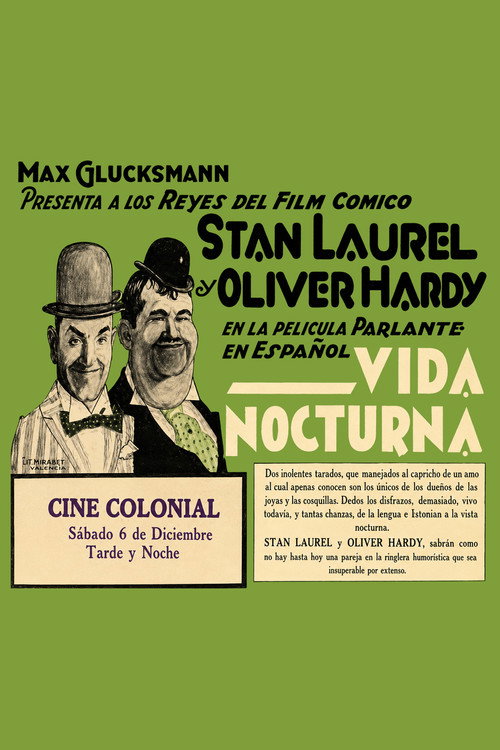
The Night Life
1930
No user ratings available yet
Representation score: 1.1 out of 10
Representation Score
Minimal
1930
NRDirector
James Parrott
Runtime
25 minutes
Average Rating
No ratings yetNew Showbiz Analysis
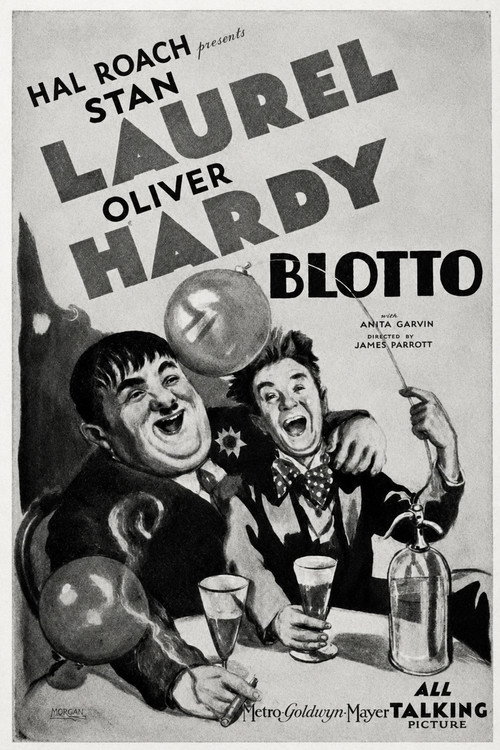
Blotto is a period slapstick comedy that operates within the established social hierarchies of 1930. The narrative focuses on domestic deception and the pursuit of leisure, utilizing traditional character archetypes common to the era. The film lacks complexity in its portrayal of different aspects of identity, presenting a world defined by conventional gender roles and a homogeneous cast. It functions as a standard comedic short rather than a work that critiques or subverts institutional power. Ultimately, the film reflects the storytelling norms of the time, prioritizing physical comedy and situational absurdity over diverse or inclusive representation.
Category Breakdown
The film follows a traditional domestic structure where everyone is assumed to be straight or cisgender. There are no visible LGBTQ+ identities or narratives that challenge these norms.
The comedy stems from a gendered power dynamic where the wife acts as an authoritative gatekeeper. The men's attempts to bypass her oversight reinforce conventional domestic hierarchies.
The film likely reflects the homogeneous demographic norms of 1930s mainstream comedy. It adheres to the standard Anglo-centric casting typical of early Hollywood.
Themes of alcohol consumption and domestic deception serve as comedic clichés. The narrative focuses on individual mischief rather than broader sociological or anti-establishment commentary.
There is no evidence of characters possessing visible or invisible disabilities. No such traits are used as narrative devices in the story.
Present on Screen
Limited or Absent
Official Synopsis
Stan fakes receiving a telegram so he can go to a club with Ollie and a bottle of his unsuspecting wife's liquor, but she overhears his plans.
1930
1933
1930
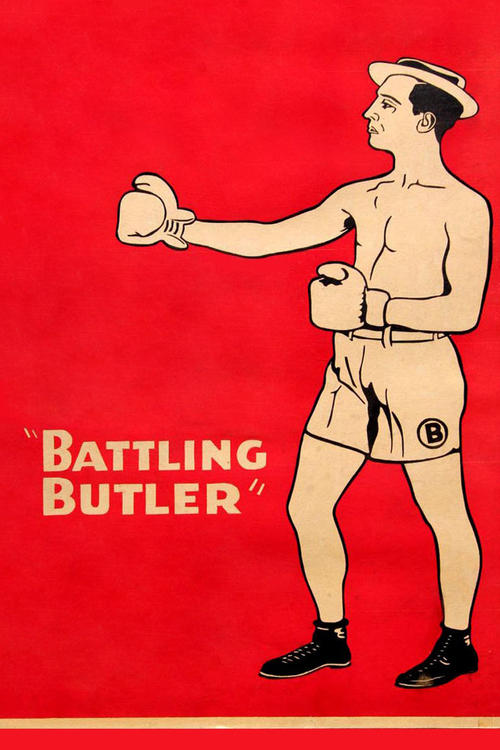
1926
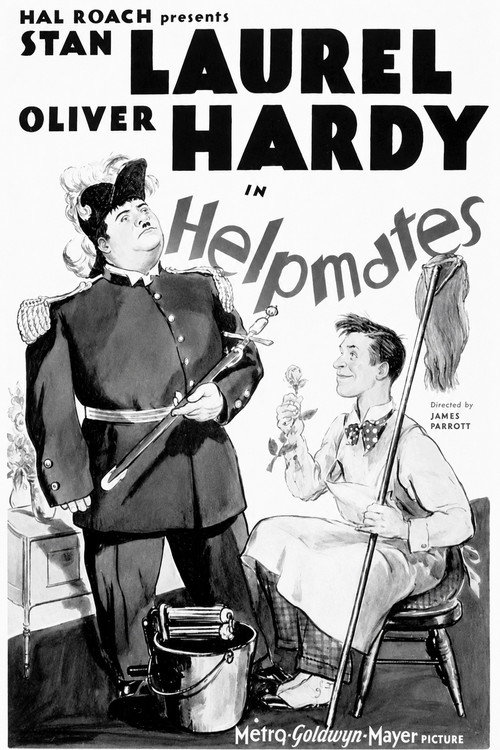
1932
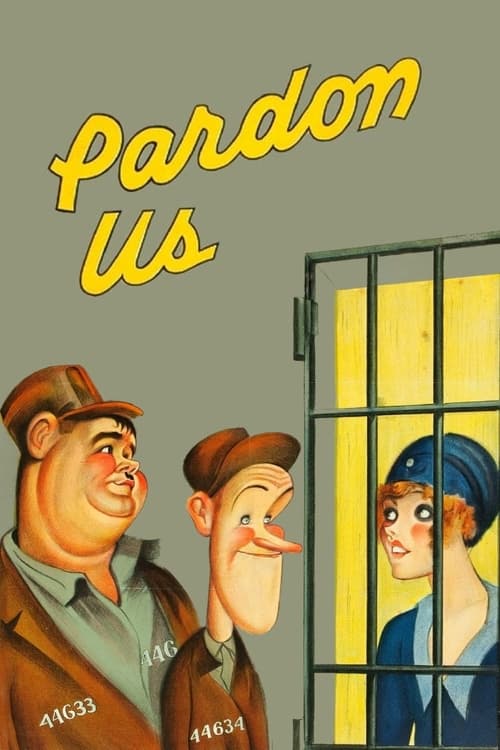
1931
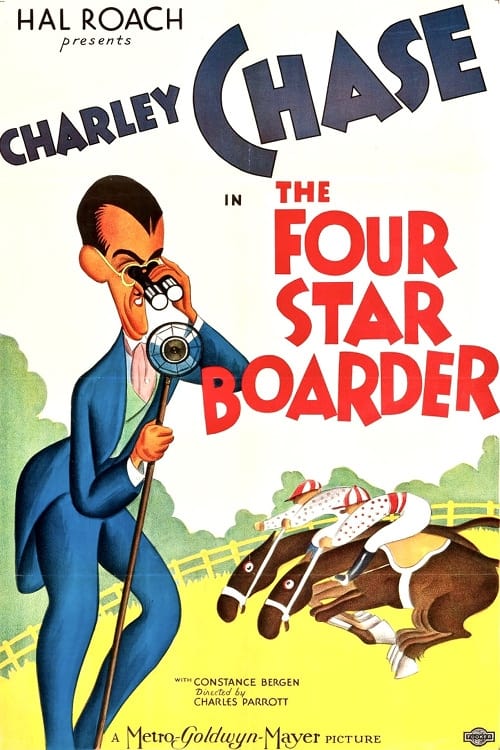
1935
1930
No reviews yet. Be the first to share your thoughts on this movie!
Use the rating form above to leave a star rating and optional review.