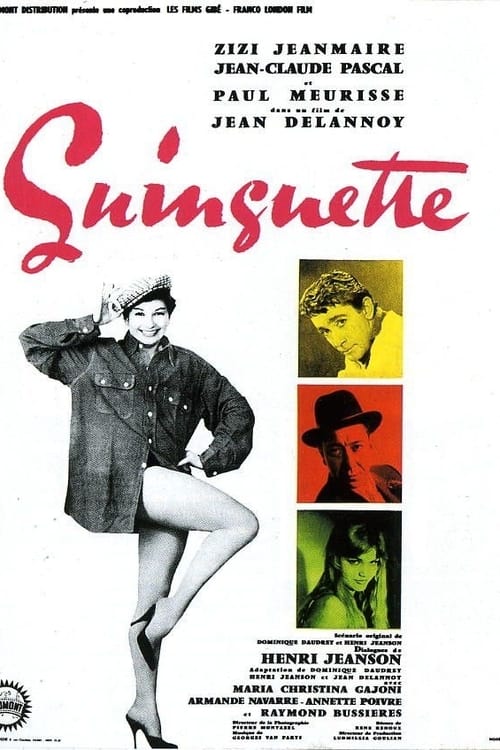
Guinguette
1959
No user ratings available yet
Representation score: 3.1 out of 10
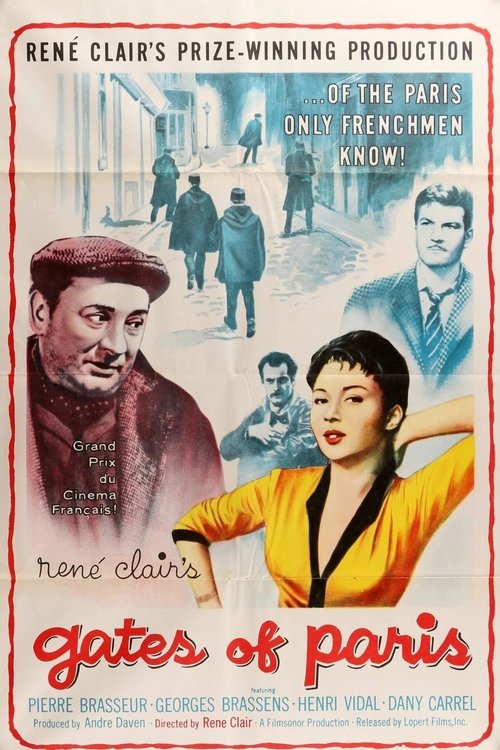
Representation Score
Limited
1957
Director
René Clair
Runtime
96 minutes
Average Rating
No ratings yetNew Showbiz Analysis
René Clair’s work functions as a mid-century humanistic character study. While it offers a poignant look at dignity under the pressure of German occupation, the narrative remains tethered to the social conventions of 1957. The film relies on established archetypes, such as the drunken oaf and the fugitive, to drive its emotional stakes. This approach prioritizes individual morality over the subversion of systemic hierarchies or multi-layered complexity. Ultimately, the production reflects a standard Western European profile. It lacks the diverse casting and modern narrative disruption necessary to move beyond a traditional, period-specific framework.
Category Breakdown
The film follows a traditional love triangle involving Juju, Maria, and Pierre. It operates within a framework that assumes everyone is straight and cisgender, with no evidence of LGBTQ+ identities or same-sex relationships.
Maria serves as a central emotional figure, yet her role is largely defined by her relationships with the men. The narrative tension primarily stems from male competition and validation.
Set in occupied Paris, the cast reflects a largely homogeneous European demographic. There is no significant presence of non-white characters with high ability to act or ethnic blending.
The story explores survival and individual morality under occupation. It focuses on humanistic drama and traditional character archetypes rather than a critique of Western institutions or systemic ideologies.
Juju’s struggle with substance dependency is used as a plot device for his redemption arc. The film lacks nuanced explorations of neurodivergence or characters with visible disabilities.
Present on Screen
Limited or Absent
Official Synopsis
Juju, a drunken oaf who feels the need of being important to someone---anyone---and his friend The Artist are forced at gunpoint to house a fugitive, Pierre Barbier, in Juju's broken-down home. The urge for being needed is such in Juju that he gives up drinking and takes care of Pierre. But one day Juju finds out that Pierre has been making love to his girl Maria...
1959

1962
1965
1932
1956

1963
1933
1939
No reviews yet. Be the first to share your thoughts on this movie!
Use the rating form above to leave a star rating and optional review.