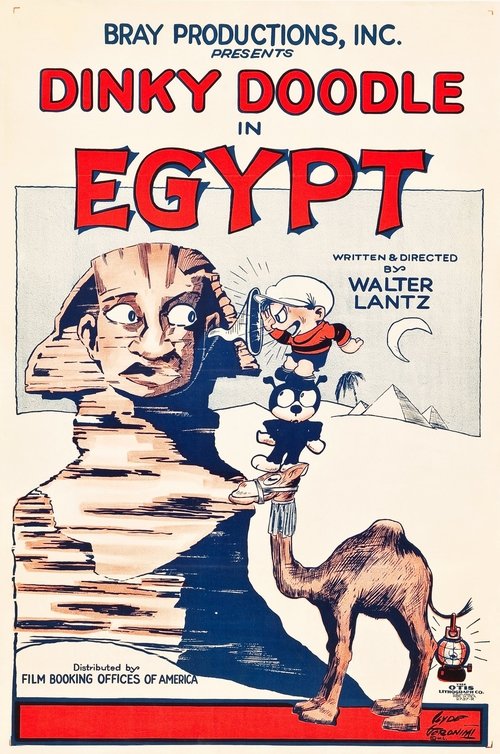
Dinky Doodle in Egypt
1926
No user ratings available yet
Diversity score: 2.2 out of 10

1926
PassedDirector
Walter Lantz
Runtime
8 minutes
Average Rating
No ratings yetSynopsis
Two pigs steal the snobby Mrs. Hippo's new Ford and, while being pursued by the police, they hit a stone wall, fly into the air and land in a laundry. They get involved with a clothes-wringer, their tails are caught in the rollers, and they come out with corkscrew tails. In the live action, animator Walter Lantz, as he finishes the story, is being led away by the keeper of the local insane asylum.
Overall Score
Limited
Category Breakdown
LGBTQ+ Representation
The film lacks any evidence of queer narratives or non-heteronormative identities. It relies on a standard slapstick structure featuring animal characters.
Gender Representation
Mrs. Hippo is depicted as a snobby female caricature used to trigger the plot. The film offers no evidence of female agency or subversion of gendered power.
Racial & Ethnic Diversity
The cast consists of anthropomorphic animals focused on class-based mischief. There is no visible exploration of racial or ethnic diversity within the narrative.
Religious & Cultural Diversity
The story critiques bourgeois stability through the theft of a Ford. However, it relies on traditional tropes regarding social conformity and institutional authority.
Disability Representation
A live-action coda uses an asylum keeper to lead away the animator. This frames mental instability as a comedic punchline rather than a nuanced portrayal.
Strengths
Areas for Improvement
AI Analysis
This 1926 animation prioritizes physical comedy and situational chaos over social representation. The narrative follows the era's conventions, focusing on class-based mischief and slapstick tropes. The film relies heavily on caricatures, such as the snobby Mrs. Hippo, to drive the plot. These archetypes reinforce traditional social hierarchies rather than challenging them. Ultimately, the work reflects the limited social awareness of the silent era, utilizing mental health and social status as tools for humor rather than meaningful characterization.
1926
1941
1940
1938
1942
1932
1931
1925
1927
1933
1948
1942
No reviews yet. Be the first to share your thoughts on this movie!
Use the rating form above to leave a star rating and optional review.