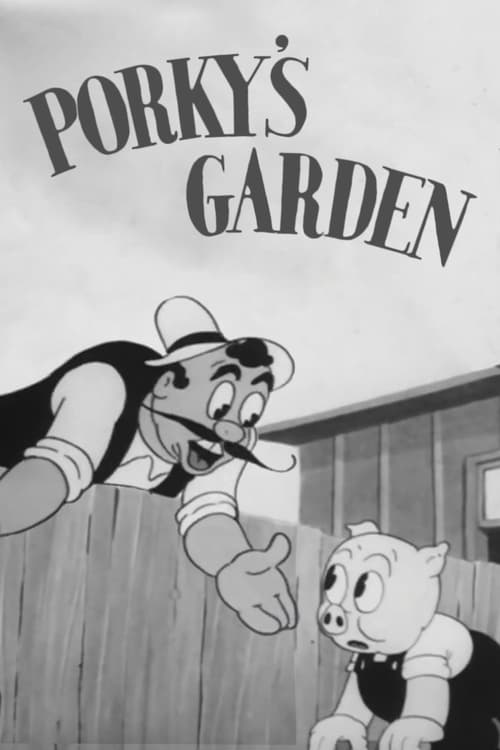
Porky's Garden
1937
No user ratings available yet
Diversity score: 2.9 out of 10

1937
Director
Tex Avery
Runtime
7 minutes
Average Rating
No ratings yetSynopsis
Momma parrot is teaching her young-uns to say "Polly want a cracker" but little Peter doesn't want a cracker, he wants to be a sailor like dad. Mom tells him what a no-account his dad really was, setting sail for Hawaii ("no, Maw, it was Catalina") right after the kids were born. Peter is unswayed, and takes off. He turns a barrel into a boat, and crews it with an annoyingly talkative duckling, then sets sail on a lake. They get caught in a thunderstorm (the duck loves it). Peter calls for help and momma comes running, but the duck has already saved him. But he still wants to be a sailor.
Overall Score
Minimal
Category Breakdown
LGBTQ+ Representation
The film contains no characters or subtextual elements related to non-cisnormative or non-heteronormative identities. Interpersonal dynamics are limited to a traditional mother and her offspring.
Gender Representation
Gender roles follow 1930s archetypes, with Momma Parrot occupying a domestic, instructional role. While Peter shows agency in his pursuits, the film reinforces conventional gender dynamics.
Racial & Ethnic Diversity
The cast consists of anthropomorphic avian characters within a homogeneous social environment. There is no evidence of racial or ethnic plurality or metaphoric diversity.
Religious & Cultural Diversity
The story reinforces traditional Western familial structures and conventional vocations. It operates within a standard, non-ideological framework without religious or secular deconstruction.
Disability Representation
No characters are depicted with visible or invisible disabilities. Disability is not utilized as a narrative element or a comedic device.
Strengths
Areas for Improvement
AI Analysis
Tex Avery’s 1937 short is a pure exercise in slapstick animation, prioritizing kinetic energy and visual gags over social depth. The narrative relies on established mid-century tropes and traditional familial archetypes to drive its simple, linear plot. The film lacks intersectional complexity, functioning instead as a historical artifact of early animation. It focuses on the mechanics of humor rather than any intentional exploration of identity or social subversion. Because the characters are anthropomorphic animals in a closed social loop, the work offers almost no engagement with diverse human identities or cultural plurality.
1937
1938
1937
1937
1943
1953
1937
1952
1937
1936
1948
1935
No reviews yet. Be the first to share your thoughts on this movie!
Use the rating form above to leave a star rating and optional review.