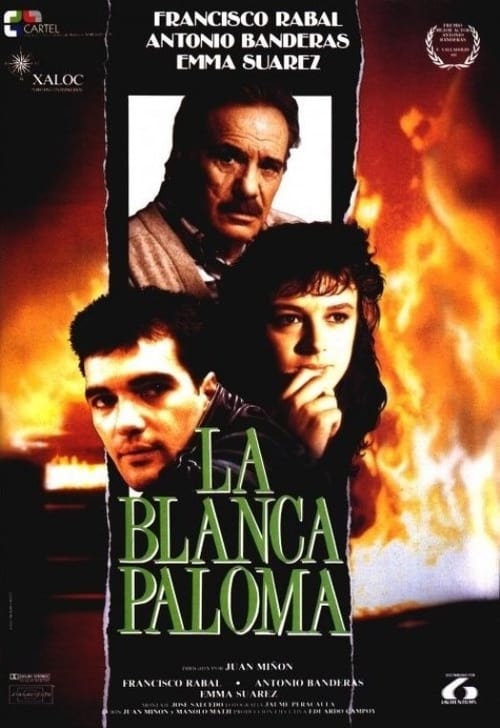
The White Dove
1989
No user ratings available yet
Diversity score: 5.4 out of 10

1996
Director
Juan Miñón
Runtime
86 minutes
Average Rating
No ratings yetSynopsis
At the end of the seventeenth century, in Naples, still dominated by the Spaniards, a young pupil, Balthasar,is castrated to preserve the purity and beauty of his voice. The Duchess dies and her son, the Duke of Arcos, takes charge of the inheritance, which includes Balthasar. With the entrance of Maria Loffredo, former lover of the Duke, a triangle is established that unchains tragic consequences to the allegedly callous life of Balthasar.
Overall Score
Fair
Category Breakdown
LGBTQ+ Representation
The story centers on Balthasar, a castrato whose identity exists outside traditional gender binaries. This provides a foundation for exploring gender-variant experiences within a historical context.
Gender Representation
Power is concentrated among male figures like the Duke of Arcos and the Spanish administration. Maria Loffredo acts as a catalyst to disrupt this male-dominated status quo.
Racial & Ethnic Diversity
The setting in Spanish-ruled Naples engages with colonial power dynamics. The film explores the tension between local Neapolitan identity and the ruling Spanish class.
Religious & Cultural Diversity
The narrative deconstructs aristocratic morality and challenges the stability of the ruling class. It critiques traditional Western institutional structures through the lens of inherited power.
Disability Representation
Balthasar’s physical alteration is used for professional preservation. He risks being a recipient of systemic decisions rather than a character possessing full bodily autonomy.
Strengths
Areas for Improvement
AI Analysis
The film offers a moderate exploration of identity by focusing on the historical reality of the castrato. This central figure introduces themes of gender non-conformity and bodily agency that challenge the era's rigid social structures. While the narrative engages with colonial power dynamics and aristocratic critique, it remains anchored in traditional period hierarchies. The focus often rests on how these systems impact individuals rather than providing a modern intersectional lens. Ultimately, the film uses historical tragedy to examine the intersection of power and personal identity. It provides a nuanced look at how systemic forces shape the lives of those living under strict social and political control.
1989
1989
1987
2010
1994

1999
1993
1985
2003
1967

1997
1978
No reviews yet. Be the first to share your thoughts on this movie!
Use the rating form above to leave a star rating and optional review.