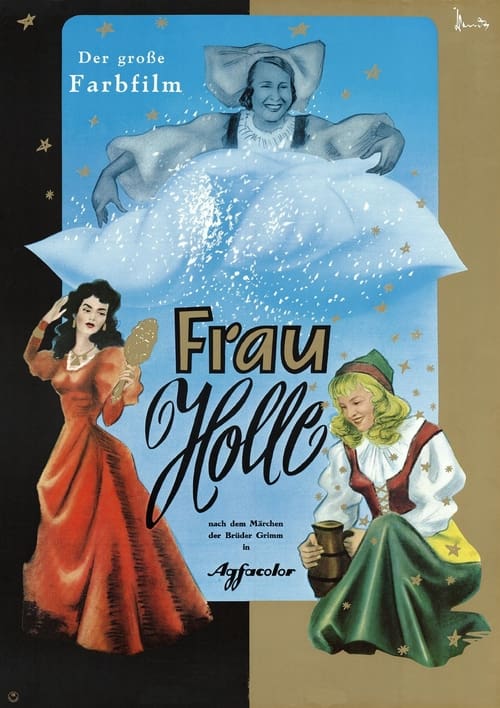
Mother Holly
1954
No user ratings available yet
Representation score: 0.4 out of 10
Representation Score
Limited
1961
Director
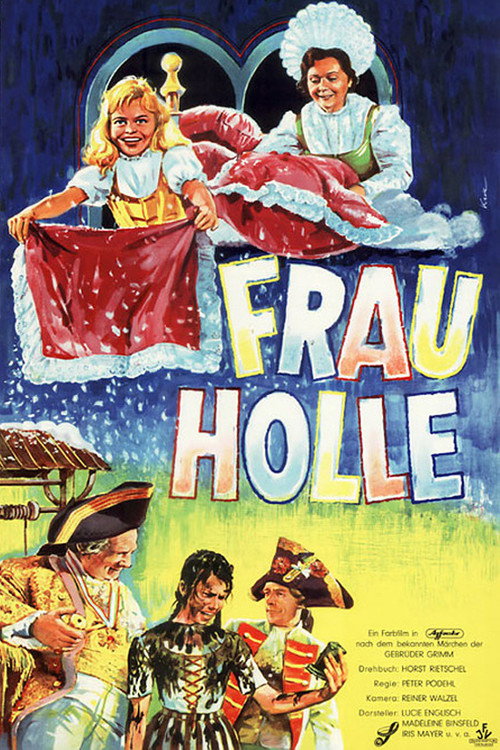
Peter Podehl
Runtime
73 minutes
Average Rating
No ratings yetNew Showbiz Analysis
Mother Holly is a traditional cultural artifact that prioritizes moral lessons over exploring modern diversity. As a mid-century adaptation of Brothers Grimm tales, it reinforces established social and moral hierarchies rather than disrupting them. The film's narrative structure focuses on preserving folklore, resulting in a production that lacks intentionality regarding identity, gender, or systemic power dynamics. Ultimately, the film offers a glimpse into 1961 European values, where character is judged through a singular, traditional lens of industriousness and virtue.
Category Breakdown
The film does not include any characters with non-binary gender identities or same-sex relationships, sticking to the assumption that everyone is straight or cisgender.
Female characters like Goldmarie and Pechmarie play important roles, but their influence is limited to traditional domestic virtues rather than challenging social hierarchies.
The film reflects a homogeneous Western European population, consistent with its Germanic folklore roots. There is no indication of diverse ethnic or racial representation.
The narrative is grounded in traditional Western morality and Christian-like frameworks, emphasizing clear distinctions between virtue and vice through supernatural rewards.
Character traits like Pechmarie's dirtiness are used as metaphors for moral standing rather than nuanced portrayals of disability. There is no evidence of characters with disabilities taking active roles.
Present on Screen
Limited or Absent
Official Synopsis
The prince’s marshal sends word throughout the land: a seamstress is wanted at the royal court! But neither the widow Berta nor her lazy and wicked daughter, Pitchmarie, can spin—so who will provide the finest yarn in the land? Goldmarie, the kind and hardworking orphan who has come to live with them, must do it! But when her spindle falls into a deep well, she follows it and finds herself in the magical realm of Mother Holly, the weather fairy. There, she carries out her duties with such diligence that she is richly rewarded with gold. Now the lazy Pitchmarie longs for the same fortune, and she, too, enters the service of Mother Holly ...
1954
1964
1960
2010
1968

1959
1956
2008
No reviews yet. Be the first to share your thoughts on this movie!
Use the rating form above to leave a star rating and optional review.