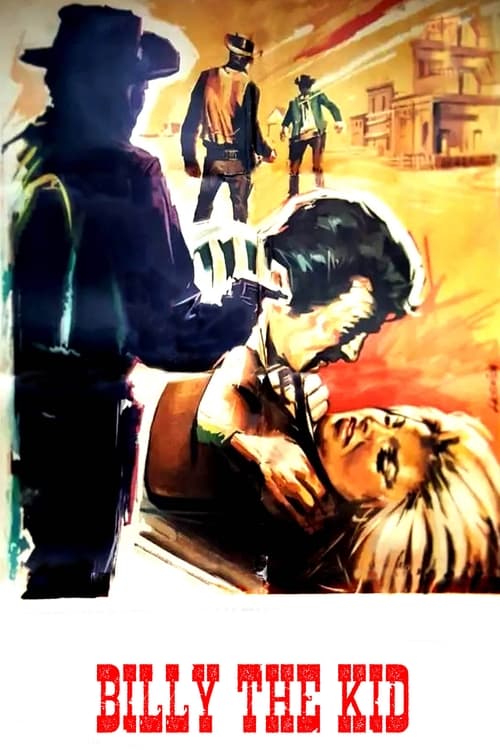
Billy the Kid
1964
No user ratings available yet
Diversity score: 1.8 out of 10
1967
Director
Julio Buchs
Runtime
101 minutes
Average Rating
No ratings yetSynopsis
This spaghetti western presents a fictitious version of the often filmed legend of Pat Garrett and Billy the Kid. Billy becomes innocently an outlaw while protecting his mother, but then turns into a trigger happy killer. When he falls in love he tries with the help of Pat Garrett, a fatherly friend, to change back. However, circumstances force Billy to become violent again and it is Garrett who is credited with the killing.
Overall Score
Limited
Category Breakdown
LGBTQ+ Representation
The film lacks any discernible presence of queer identities or subtext. Character dynamics focus on traditional masculine rivalries and heteronormative romance.
Gender Representation
The narrative is heavily male-centric, focusing on violent interactions between men. Female characters, such as the mother and romantic interest, serve primarily as catalysts for the male protagonist.
Racial & Ethnic Diversity
Casting is predominantly white, adhering to standard Anglo-centric Western tropes. There is no evidence of meaningful ethnic plurality or the subversion of racial hierarchies.
Religious & Cultural Diversity
The film operates within a traditional Western framework of individualistic survival. It presents vigilantism as a vocational reality rather than offering a critique of religious or social institutions.
Disability Representation
There is no visible or invisible disability integrated into the character arcs. Characters are defined by their capacity for violence rather than physical or mental health conditions.
Strengths
Areas for Improvement
AI Analysis
This Spaghetti Western functions as a conventional genre piece that reinforces mid-century archetypes. The narrative focuses on the deconstruction of a legend through the lens of identity and deception, yet it remains rooted in traditional masculine tropes. The film lacks intersectional perspectives, prioritizing individualistic violence over systemic social critique. Agency is almost exclusively the domain of the male protagonist, leaving little room for diverse social or cultural exploration. Ultimately, the work reflects the cinematic constraints of its era, offering a homogeneous cast and a story centered on standard Western tropes of honor and survival.
1964
1930
1966
1957
1951

1965
1947
1968
1964
1949
1968
1973
No reviews yet. Be the first to share your thoughts on this movie!
Use the rating form above to leave a star rating and optional review.