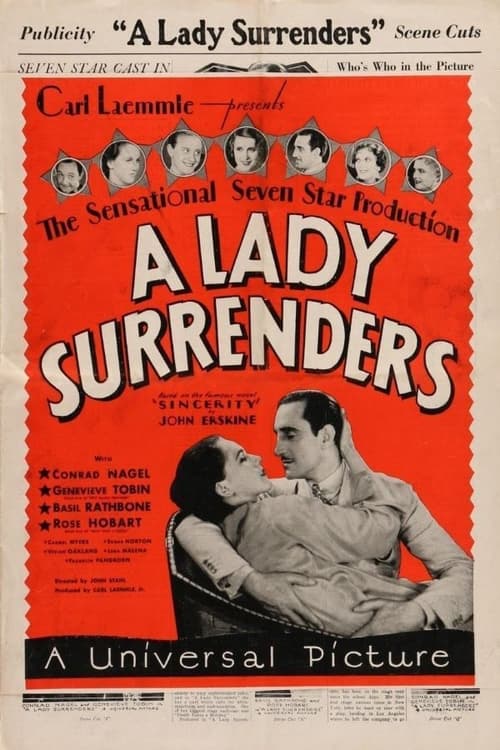
A Lady Surrenders
1930
No user ratings available yet
Representation score: 0.8 out of 10

Representation Score
Limited
1930
NRDirector
Robert Z. Leonard
Runtime
83 minutes
Average Rating
No ratings yetNew Showbiz Analysis
The Divorcee stands as a significant example of pre-Code era filmmaking, offering a glimpse into social transgressions that would later be restricted. Its main strength lies in its subversion of traditional gender roles, highlighting female autonomy and control in the face of infidelity. However, the film remains confined by the socioeconomic and racial homogeneity typical of the early 20th-century studio system. While it provides a sophisticated exploration of situational ethics, it falls short in representing a broader range of identities. The narrative primarily serves as a character-driven study of social maneuvering within a conventional, white, upper-class context.
Category Breakdown
The film focuses solely on heterosexual relationships and marriage laws. There are no representations of non-straight or non-cisgender identities, nor any queer undertones.
The movie challenges traditional gender roles by focusing on a female protagonist who gains control after her husband's infidelity. She actively shapes her romantic journey instead of being a passive figure.
The cast is predominantly uniform, reflecting the era's production standards. There is no indication of intentional racial diversity or varied ethnic perspectives within the upper-class setting.
The film delves into moral relativism by making divorce a central theme. It examines the complexities of social standing and the nuances of marital ethics.
There is no depiction of physical, sensory, or neurodivergent disabilities within the characters or storyline.
Present on Screen
Limited or Absent
Official Synopsis
When a woman discovers that her husband has been unfaithful, she decides to pay him back in kind.
1930

1952

1931

1953

1929

1935

1932

1939
No reviews yet. Be the first to share your thoughts on this movie!
Use the rating form above to leave a star rating and optional review.