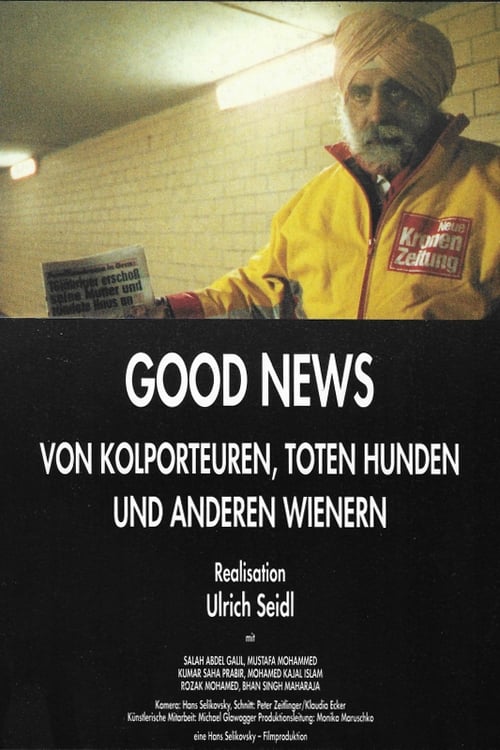
Good News: Newspaper Salesmen, Dead Dogs and Other People from Vienna
1990
No user ratings available yet
Representation score: 7.2 out of 10

Representation Score
Good
1983
GDirector
Gary Kildea
Runtime
109 minutes
Average Rating
No ratings yetNew Showbiz Analysis
Gary Kildea’s documentary succeeds by humanizing a Filipino family rather than treating their poverty as a spectacle. It focuses on the daily humor, irritation, and courage of Celso and Cora, granting the subjects a significant role in driving the story and depth. The work effectively challenges Western-centric storytelling hierarchies. It shifts the gaze away from an outsider's perspective, instead providing an embedded view of Philippine social stratification and the struggles of the working class against institutionalized capitalism. While the film excels in racial and cultural representation, it remains rooted in a traditional domestic framework that does not explore LGBTQ+ identities or disability.
Category Breakdown
The film centers on a traditional nuclear family structure. There is no evidence of non-assuming gender matches what was assigned at birth identities or same-sex intimacy depicted in the narrative.
The film emphasizes Cora's significant role in securing housing and supporting her family. It portrays a shared responsibility rather than a strict patriarchal hierarchy.
The documentary focuses on a Filipino family living in a Manila squatter settlement, offering an authentic look at their cultural context and daily life.
The narrative presents the family's defiance of city regulations as a means of survival, offering a nuanced view of the working class navigating oppressive urban systems.
There is no specific evidence regarding the portrayal of visible or invisible disabilities within the provided context.
Present on Screen
Limited or Absent
Official Synopsis
A documentary of a young couple and their two children living in a squatter settlement in the Philippine capital, Manila. Rather than just a report on poverty, this is a universal story of people experiencing everyday events with a mixture of humor, irritation, weariness, and courage. Cora and Celso make a living selling cigarettes at night outside a downtown hotel in defiance of City regulations. The film follows their lives over a three-month period, beginning with Cora's attempt to find a new room for the family after they have been evicted from their previous home. Later, Celso and Cora face a crisis in their own relationship aggravated by the stresses of their daily life.
1990

2000

2018
1970
1975
1963

2011
2004
No reviews yet. Be the first to share your thoughts on this movie!
Use the rating form above to leave a star rating and optional review.