Rhapsody in Rivets
1941
No user ratings available yet
Diversity score: 2.9 out of 10
1937
ApprovedDirector
Friz Freleng
Runtime
8 minutes
Average Rating
No ratings yetSynopsis
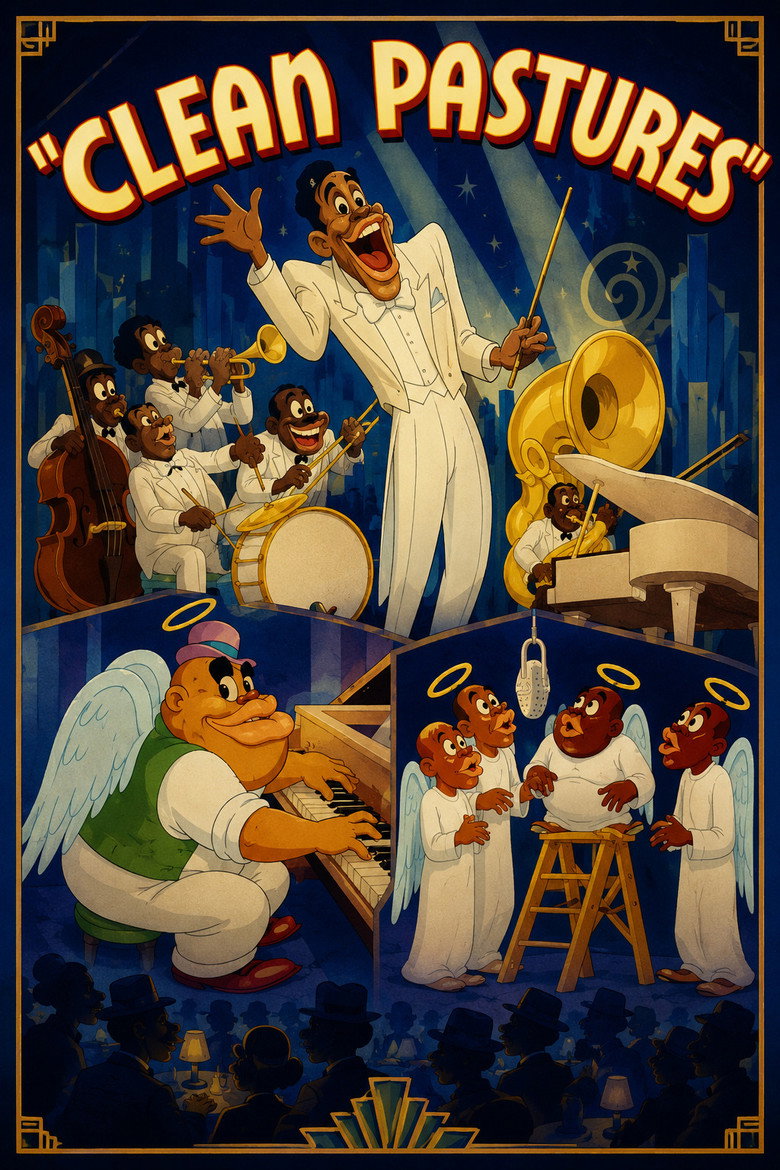
The Lord sees that the stock value of "Pair-o-dice" is dropping on the exchange so he dispatches a slow-witted and slow-talking angel to sinful Harlem to recruit new customers. When this fails, God finds success sending a group of musical angels with a little more swing in their style, so much so that even the Devil wants to join up! One of the “Censored 11” banned from TV syndication by United Artists in 1968 for racist stereotyping.
Overall Score
Minimal
Category Breakdown
LGBTQ+ Representation
The film contains no depictions of non-cisnormative identities or same-sex intimacy. The celestial character dynamics focus entirely on a traditional hierarchy of God, angels, and the Devil.
Gender Representation
Gender representation is limited by a rigid, top-down authority structure. The film lacks any subversion of traditional masculine leadership or gendered intellect.
Racial & Ethnic Diversity
This work is a primary example of regressive representation, belonging to the 'Censored 11' for its use of harmful racial caricatures. It employs derogatory tropes in its Harlem setting to reinforce racial hierarchies.
Religious & Cultural Diversity
The narrative operates within a traditional Western religious framework. It uses religious iconography as a backdrop for musical comedy rather than exploring complex or subjective morality.
Disability Representation
There is no meaningful representation of neurodivergence or physical disability. Characters described as 'slow-witted' are used as comedic devices rather than individuals with agency.
Strengths
Areas for Improvement
AI Analysis
Clean Pastures is a historical artifact that exemplifies the systemic biases of early 20th-century animation. The film relies heavily on regressive social hierarchies and harmful caricatures to drive its comedic elements. Its inclusion in the 'Censored 11' highlights its reliance on derogatory visual and auditory tropes. The narrative structure reinforces traditional, exclusionary social orders rather than challenging them. Ultimately, the film functions as a collection of stereotypes, utilizing religious and racial tropes to maintain a status quo of mockery and hierarchy.
1941
1935
1936
1933
1932

1934
1930
1938
1947
1955
1950
1934
No reviews yet. Be the first to share your thoughts on this movie!
Use the rating form above to leave a star rating and optional review.