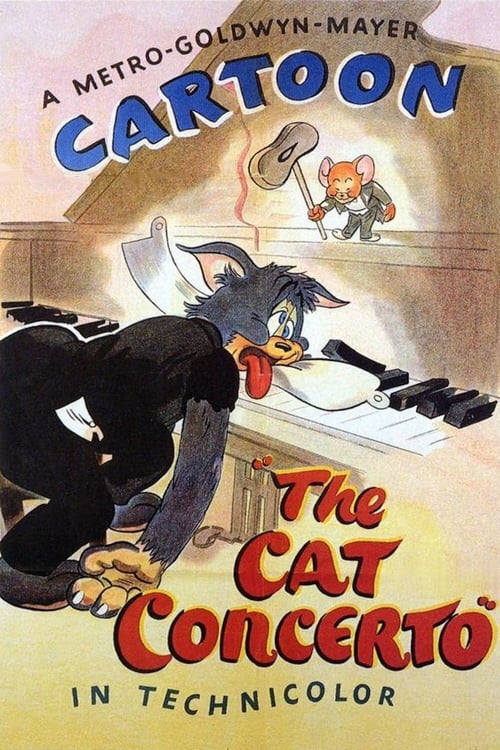
The Cat Concerto
1947
No user ratings available yet
Representation score: 0.9 out of 10
Representation Score
Minimal
1941
ApprovedDirector
Friz Freleng
Runtime
8 minutes
Average Rating
No ratings yetNew Showbiz Analysis
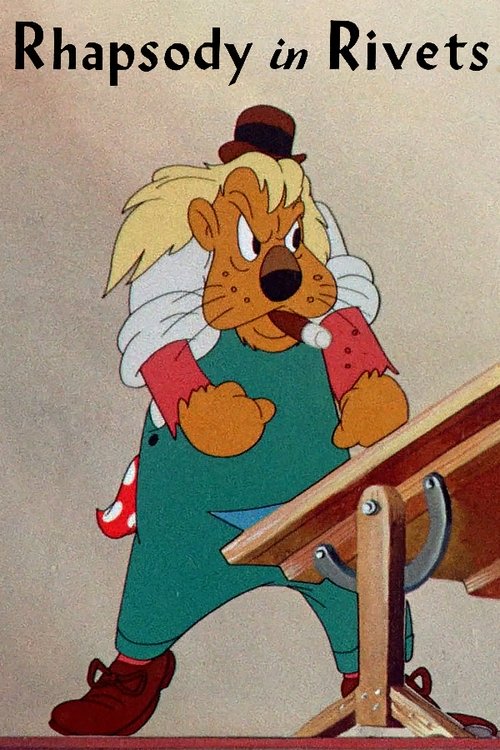
Rhapsody in Rivets is a technical exercise in musical animation that prioritizes rhythmic synchronization over social complexity. The narrative uses a construction crew to mirror Liszt's composition, focusing on the intersection of industry and art. The film functions as a period-accurate reflection of 1941, emphasizing productivity and structural order. It adheres to the era's conventional social hierarchies, particularly regarding gender and labor. Ultimately, the work lacks engagement with identity politics, choosing instead to celebrate the mechanical and the musical through a traditional lens.
Category Breakdown
The film focuses entirely on industrial labor and musical orchestration. There is no evidence of LGBTQ+ identities or narratives exploring interpersonal identity dynamics.
Set in a 1941 construction site, the film relies on traditional mid-century hierarchies. The roles of foreman and workers imply a homogeneous masculine environment without women's ability to drive the story.
The narrative lacks indication of diverse casting or race-bending. Characters function as standardized units of a symphony rather than individuals with distinct ethnic identities.
The film celebrates Western classical music and industrial progress. It reinforces traditional values of organized labor and the structural achievements of Western capitalism.
Characters appear as standardized rhythmic components of an orchestra. There is no evidence of characters with visible or invisible disabilities.
Present on Screen
Limited or Absent
Official Synopsis
A construction foreman conducts his workers like a symphony orchestra as they build a skyscraper to Franz Liszt's "Hungarian Rhapsody No. 2."
1947
1935

1934
1942

1942

1943

1942
1945
No reviews yet. Be the first to share your thoughts on this movie!
Use the rating form above to leave a star rating and optional review.