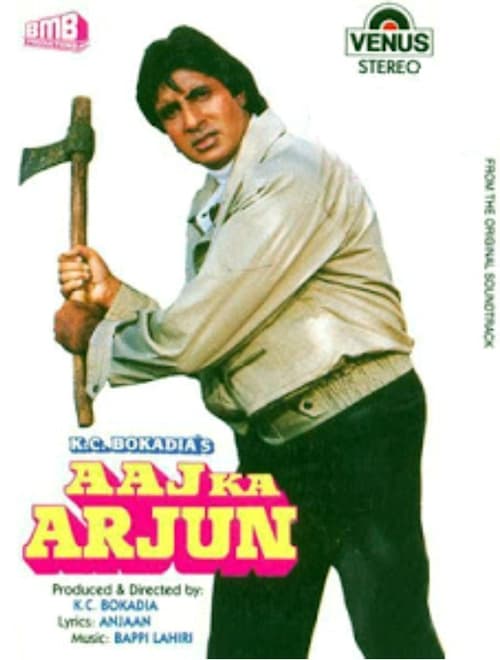
Aaj Ka Arjun
1990
No user ratings available yet
Representation score: 2.7 out of 10

Representation Score
Limited
1985
Director
Vijay Reddy
Runtime
150 minutes
Average Rating
No ratings yetNew Showbiz Analysis
Teri Meherbaniyan is a traditional 1980s action-drama that relies heavily on established genre clichés. The plot centers on a hero-centric struggle between an honest newcomer and a ruthless village oppressor, prioritizing individual morality over systemic critique. The film reinforces conventional social hierarchies. Gender roles are strictly defined, with male characters driving the conflict and female characters serving as secondary figures or victims. The narrative lacks multi-layered depth or progressive subversion. While the film provides authentic representation of regional South Asian village life, it does so through a homogeneous lens. It functions as a standard morality tale rather than a tool for social or cultural deconstruction.
Category Breakdown
The film focuses on heterosexual relationships, particularly the marriage of a young couple. It does not include any non-cisgender identities or critiques of heterosexuality.
Male characters play a significant role in driving the story and control over the plot. Female characters are primarily portrayed as victims or romantic interests, reinforcing traditional gender roles.
The film is set in a South Asian village, depicting local power dynamics. However, it operates within a largely homogeneous cultural framework.
The story follows a traditional morality play structure, emphasizing communal values and justice through a binary of good versus evil.
The narrative does not include any characters with physical or neurodivergent disabilities.
Present on Screen
Limited or Absent
Official Synopsis
Living under the thumb of ruthless Thakur Vijay Singh (Amrish Puri), a small village finds hope in honest newcomer Ram (Jackie Shroff), who stands up to the bully. But Ram goes too far when he helps a certain young couple get married, and Singh's men exact a terrible revenge. Will the villagers ever get justice, or will Singh and his thugs continue to abuse the innocent? Poonam Dhillon, G. Asrani, Swapna and Raj Kiran co-star.
1990
1990
1987
1993
1997

1994
1990
2000
No reviews yet. Be the first to share your thoughts on this movie!
Use the rating form above to leave a star rating and optional review.