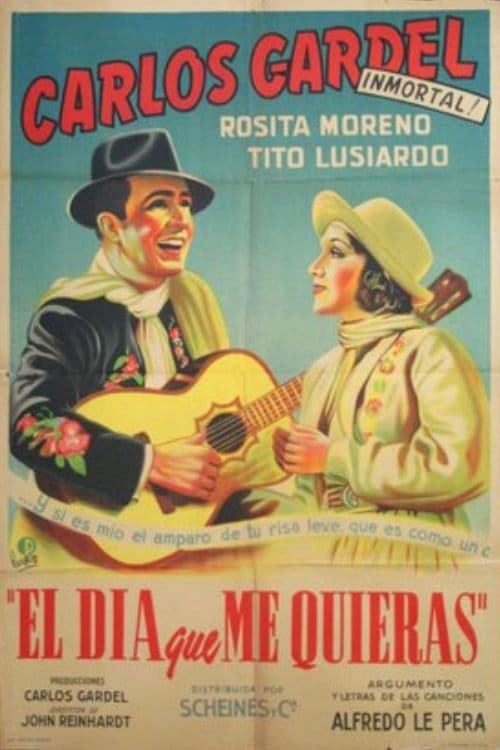
The Day You Love Me
1935
No user ratings available yet
Diversity score: 3.2 out of 10

1935
PassedDirector
Leo Bulgakov
Runtime
75 minutes
Average Rating
No ratings yetSynopsis
Nora Clegg, an actress, marries Carl Brent, an unemployed young engineer, whose estimation of his worth and ability keeps him from getting a job. He finally acquires a position that will require him to go to Russia for a period of time, while Nora goes back to the stage during his absence. But he loses out on the job at the last minute, and rather than tell Nora he has failed again, he steals a roll of money from his prospective employer to buy some things for Nora and go out and have a good time before, she things, his departure. His departure is to jail rather than Russia and he hides the truth from Nora by having an acquaintance mail his letters from Russia. He then finds out that Nora is pregnant.
Overall Score
Limited
Category Breakdown
LGBTQ+ Representation
The film lacks any discernible LGBTQ+ characters or non-cisnormative identities. The central plot focuses entirely on a traditional heterosexual marriage.
Gender Representation
Nora Clegg shows professional agency as an actress, yet the story remains anchored to the male protagonist's struggles. The narrative tension stems from his failure to meet traditional provider roles.
Racial & Ethnic Diversity
The story features no evidence of a multi-ethnic cast. The setting appears to reflect a homogeneous social environment typical of 1930s dramatic productions.
Religious & Cultural Diversity
The film explores moral ambiguity through themes of theft and deception. It centers on Western concepts of marriage and professional duty rather than diverse cultural critiques.
Disability Representation
There is no mention of characters with visible or invisible disabilities. The narrative does not address neurodivergence or chronic health conditions.
Strengths
Areas for Improvement
AI Analysis
The film operates within the conventional dramatic frameworks of the 1930s. It provides a nuanced look at the psychological pressures of economic instability and the breakdown of traditional masculine roles, but it lacks intersectional complexity. While Nora Clegg possesses professional independence, the plot's momentum is driven by the male protagonist's criminal actions and professional failures. This keeps the focus on a narrow, traditional social hierarchy. Ultimately, the production lacks intentional disruption of social norms, offering a story that adheres to the demographic and cultural standards of its era.
1935
1934

1935
1931
1934
1936
1986
1932

1930
1933
1937
1931
No reviews yet. Be the first to share your thoughts on this movie!
Use the rating form above to leave a star rating and optional review.