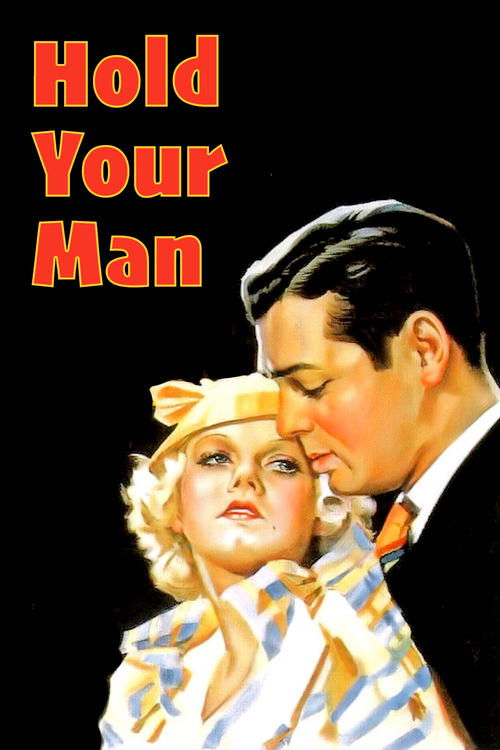
Hold Your Man
1933
No user ratings available yet
Representation score: 2.1 out of 10

Representation Score
Minimal
1935
ApprovedDirector
Leo Bulgakov
Runtime
60 minutes
Average Rating
No ratings yetNew Showbiz Analysis
After the Dance is a conventional 1930s drama that adheres strictly to the social and narrative conventions of its era. The story centers on a male protagonist's struggle with criminal liability and his subsequent romantic and professional reintegration. The film lacks intentional subversion of identity norms. It relies on established formulas where female characters act as stabilizers for male leads, and the cast reflects the era's lack of racial diversity. Ultimately, the film functions as a standard studio-era melodrama, prioritizing individual resilience within existing societal structures over any exploration of diverse perspectives.
Category Breakdown
The film follows a traditional romantic arc between Jerry Davis and Anne Taylor. There are no depictions of same-sex relationships or non-binary gender identities.
Anne Taylor plays a significant role by helping Jerry find work, but the main conflict is driven by male characters. The female lead primarily serves as a catalyst for the protagonist's redemption.
The cast appears homogeneous, reflecting the mainstream studio productions of the 1930s. There is no evidence of racial blending or non-white majority casting.
The narrative operates within a framework of traditional morality and social order. It focuses on legal consequences and professional perseverance rather than systemic critique.
There is no evidence regarding the portrayal of physical or neurodivergent disabilities in this production.
Present on Screen
Limited or Absent
Official Synopsis
Though he was protecting her when he accidentally killed a man, Mabel Kane (Thelma Todd) refuses to testify on behalf of her dance partner Jerry Davis (George Murphy), and he's sent to jail. In a riot, a hostile convict (Jack La Rue) forces Jerry to help him escape, so Jerry takes to the streets himself. Nightclub entertainer Anne Taylor (Nancy Carroll) meets him, and convinces her boss Louis (Arthur Hohl) to hire him as her partner.
1933
1942
1930
1928
1933

1937
1929
1937
No reviews yet. Be the first to share your thoughts on this movie!
Use the rating form above to leave a star rating and optional review.