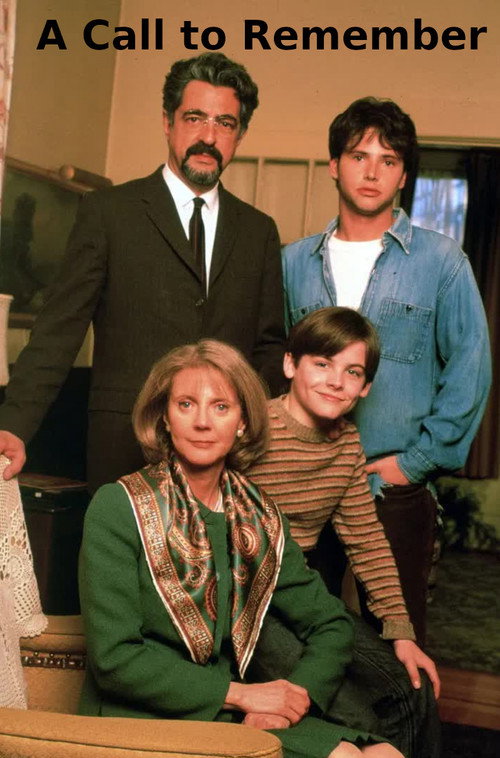
A Call to Remember
1997
No user ratings available yet
Diversity score: 4.2 out of 10

1991
Director
Silvano Agosti
Runtime
102 minutes
Average Rating
No ratings yetSynopsis
A man walks with his child on the grass of a hill. He reaches an old country house, where years before he had spent his childhood during World War II. The deserted and desolate rooms make him travel back in memory to the time when the war was ending. Episodes of family life pass before his eyes: father, mother, grandmother and six children, of which he, Silvano, the youngest, was made mute by the shock of a bomb exploding...
Overall Score
Fair
Category Breakdown
LGBTQ+ Representation
The film focuses on a nuclear family structure within a historical context. There is no evidence of LGBTQ+ characters or critiques of heteronormativity.
Gender Representation
The narrative emphasizes the domestic sphere, featuring a mother and grandmother. It shifts focus from masculine combat tropes toward the lived experiences of the household.
Racial & Ethnic Diversity
Set in a European context during WWII, the film reflects the demographic homogeneity of that era. No multi-ethnic cast is indicated.
Religious & Cultural Diversity
The film deconstructs traditional stability by framing family life through trauma. It offers a nuanced, less patriotic view of historical conflict and its psychological costs.
Disability Representation
The protagonist's selective mutism is a central narrative driver. This psychological disability is presented as a profound consequence of systemic violence rather than a mere plot device.
Strengths
Areas for Improvement
AI Analysis
Sweet War, Farewell is a psychological study of trauma that prioritizes individual memory over large-scale historical heroism. By focusing on the domestic aftermath of World War II, the film avoids traditional war tropes in favor of exploring how systemic violence fractures the family unit. The film's strength lies in its nuanced portrayal of disability and its refusal to romanticize the past. The protagonist's mutism serves as a powerful symbol of the inability to process historical atrocities, providing a unique perspective on the human cost of conflict. However, the film remains limited by the demographic homogeneity of its setting. It lacks intersectional depth, focusing almost exclusively on a traditional European family structure without exploring broader racial or LGBTQ+ identities.
1997
1986
1977

1966
1948

1960
2016

1948

2005
1980

1989
1946
No reviews yet. Be the first to share your thoughts on this movie!
Use the rating form above to leave a star rating and optional review.