
Family Diary
1962
No user ratings available yet
Representation score: 3.4 out of 10
Representation Score
Limited
1966
Not RatedDirector
Florestano Vancini
Runtime
93 minutes
Average Rating
No ratings yetNew Showbiz Analysis
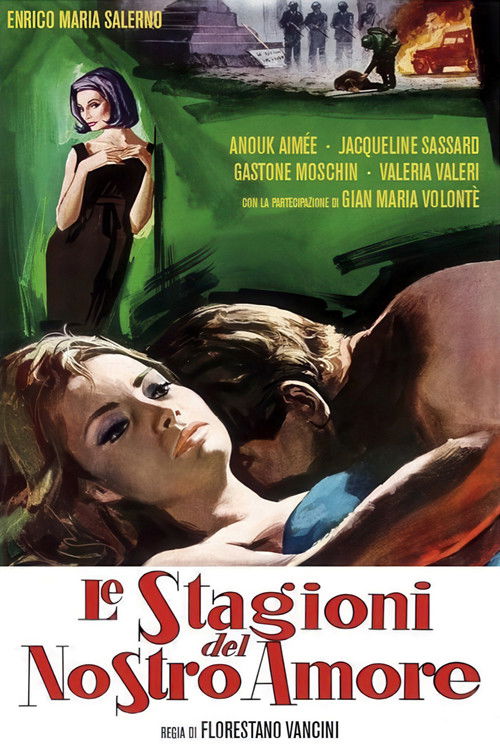
Seasons of Our Love is a character-driven exploration of a mid-life crisis set against the backdrop of post-war Italy. The film prioritizes psychological realism and the internal struggles of its protagonist over broad social representation. While the film lacks contemporary markers of diversity, it succeeds in deconstructing traditional domestic stability. It moves away from heroic historical clichés to focus on the fractured nature of familial and romantic bonds. Ultimately, the work is a product of its era, focusing on a localized, Eurocentric experience that examines how historical trauma shapes individual development.
Category Breakdown
The story focuses on heterosexual relationships, with the protagonist's marriage and an extramarital affair taking center stage. There are no representations of LGBTQ+ identities or non-cisgender narratives.
The film depicts domestic conflict through a wife who is portrayed as nagging. While it risks using the 'difficult spouse' stereotype, it challenges the 'competent patriarch' archetype by showing the male lead as emotionally unstable and adrift.
The film seems to reflect the demographic uniformity of 1960s Italy, focusing on a localized, Eurocentric perspective without a diverse cast.
The story uses flashbacks to explore the impact of World War II trauma on families. It avoids idealized history, opting for a complex, psychological examination of identity and societal effects.
There is no documentation of the portrayal of physical or neurodivergent disabilities in this work.
Present on Screen
Limited or Absent
Official Synopsis
Vittorio is a 40-year-old journalist who reaches a mid-life crisis. His wife nags him constantly for ignoring her and their child. After his mistress dumps him, Vittorio returns to the town where he spent his childhood to reflect on the state of his life. Flashbacks are used to tell of Vittorio’s relationship with his parents as a child and the effects World War II had on his development.
1962

1950
1963

1957
1991
1958
1983
1984
No reviews yet. Be the first to share your thoughts on this movie!
Use the rating form above to leave a star rating and optional review.