
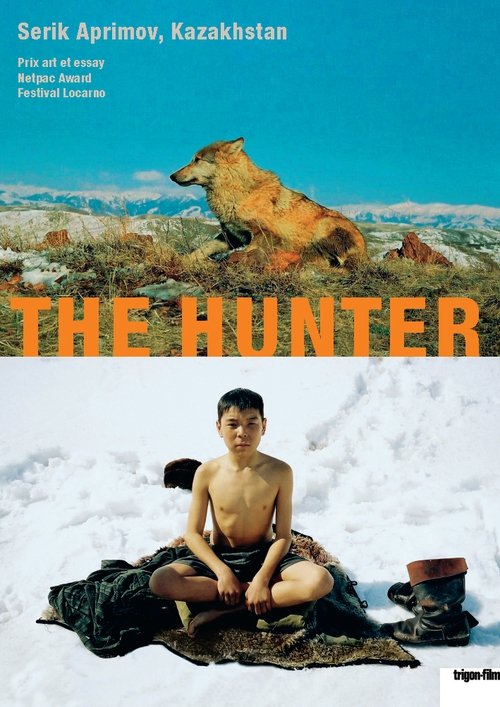
The Hunter
2011
No user ratings available yet
Representation score: 7.2 out of 10
Representation Score
Fair
1991
PGDirector
Nikita Mikhalkov
Runtime
119 minutes
Average Rating
No ratings yetNew Showbiz Analysis
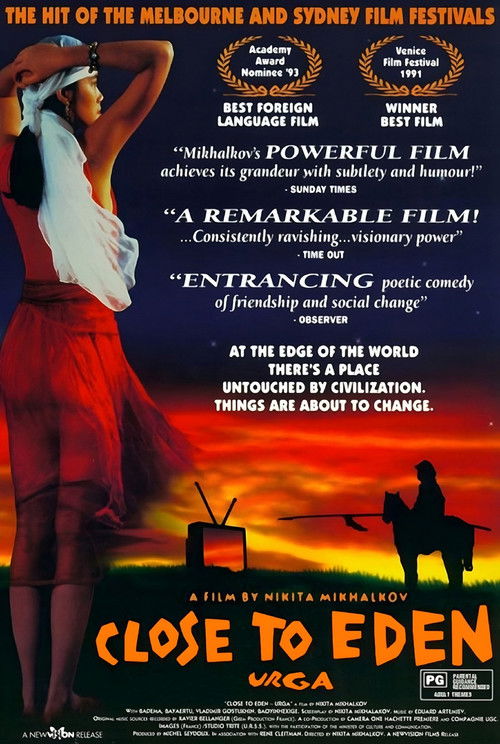
Close to Eden functions primarily as a cross-cultural drama that finds its strength in ethnic blending. The interaction between Chinese peasants and a Russian outsider provides a unique platform for exploring different backgrounds within a shared space. However, the film operates within a relatively traditional framework. The narrative structure relies on conventional dramatic formulas and straight-centered structures, particularly regarding the central family unit and gender roles. While the film successfully navigates systemic state pressures and geographic diversity, it lacks depth in representing non-traditional identities or challenging social hierarchies.
Category Breakdown
The film focuses on a traditional family unit with a farmer, his wife, and their children. There are no LGBTQ+ characters or narratives addressing non-straight relationships.
The story centers on a traditional agrarian family with a patriarchal leader. While the wife plays a central role, the narrative does not challenge established gender hierarchies.
Set in Inner Mongolia, the film highlights significant cross-cultural exchange. Placing a Russian outsider in a Chinese rural setting disrupts expectations of a homogeneous cultural environment.
The plot critiques systemic state intervention through the lens of Chinese population control policies. It emphasizes a traditional appreciation of countryside life over modern critiques.
The narrative does not address visible or invisible disabilities. No characters are identified as having specific disability-related traits or plot arcs.
Present on Screen
Limited or Absent
Official Synopsis
A farmer and his wife live in a rural part of Inner Mongolia with their three children. Chinese population control policies prevent them from having any more. The farmer sets out for the nearest town to obtain birth control. He comes upon a Russian truck driver who has ended up in a lake. The farmer takes the man back to his farm, and after initially being appalled, the Russian becomes enchanted with the peaceful life of the countryside and decides to stay. But his presence presages big changes for the peasants.
2011
1978
2007

1983
1994
2013
1991
2004
No reviews yet. Be the first to share your thoughts on this movie!
Use the rating form above to leave a star rating and optional review.