The Flight of Dead Bird
1973
No user ratings available yet
Representation score: 5.0 out of 10
Representation Score
Limited
1991
Director
Lidiya Bobrova
Runtime
88 minutes
Average Rating
No ratings yetNew Showbiz Analysis
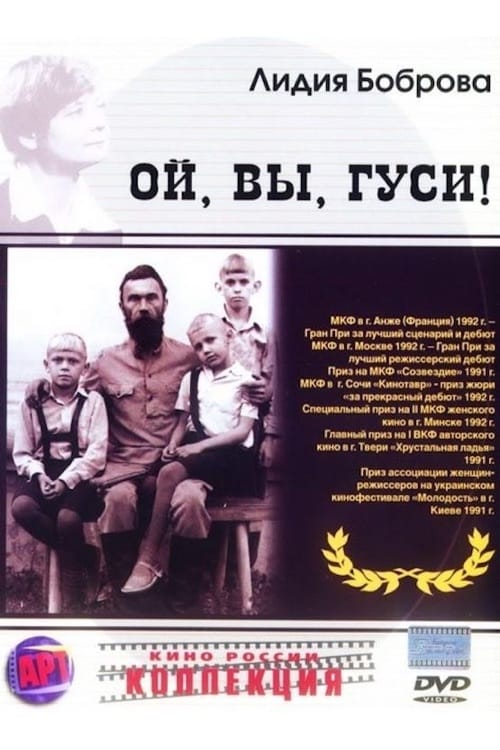
Lidiya Bobrova’s drama focuses on the systemic issues of the Russian countryside and the collapse of the collective farm system. It prioritizes a critique of traditional family structures and societal stagnation over diverse representation. The film's strength lies in its cultural critique, using the metaphor of migrating geese to highlight the lack of mobility for rural workers. It deconstructs the myth of the successful Soviet collective by focusing on individual suffering. However, the film remains narrow in its scope. It relies on traditional gender roles and an ethnically homogeneous cast, offering little representation for LGBTQ+ identities or diverse racial backgrounds.
Category Breakdown
The film does not include any characters with non-straight identities. It focuses solely on traditional family structures and their eventual breakdown.
The story revolves around three brothers who embody masculine archetypes. Women are likely burdened by domestic duties, but the plot is driven mainly by male characters in traditional roles.
The cast and setting are ethnically uniform, depicting the Russian peasantry. There is no multicultural perspective.
The film strongly critiques the kolkhoz system. It uses social realism to challenge idealized Soviet portrayals of collective labor and state institutions.
There is no information regarding the portrayal of physical or neurodivergent characters in this work.
Present on Screen
Limited or Absent
Official Synopsis
Director Lydia Bobrova pictures the bleak life in the Russian countryside by showing some events in the life of three brothers and their families. The three brothers are different in character, but all suffer from the dreariness of kolchoz life. The title is derived from a nostalgic Russian song. The wild geese have the possibility of moving on to milder climes, a possibility that Russian country people don’t have.
1973
1978
1998

1963

1990
1966
2019
1943
No reviews yet. Be the first to share your thoughts on this movie!
Use the rating form above to leave a star rating and optional review.