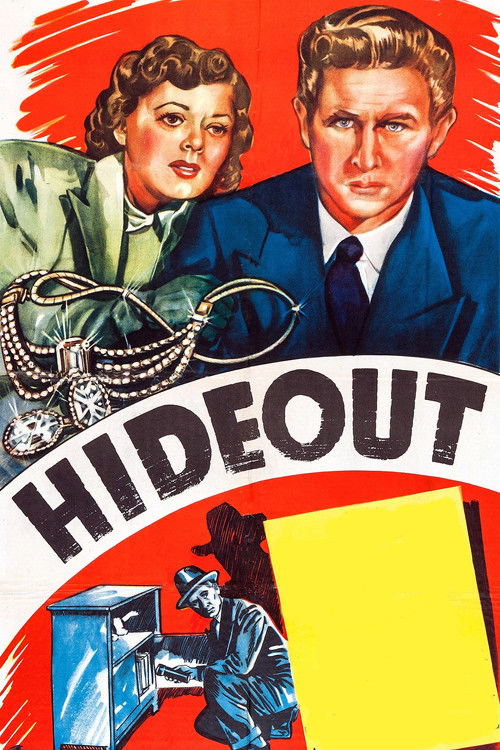
Hideout
1949
No user ratings available yet
Diversity score: 2.4 out of 10

1946
NRDirector
Philip Ford
Runtime
56 minutes
Average Rating
No ratings yetSynopsis
Janet Spencer is driving down a country road when one of her tires blows out. This seemingly innocuous, everyday occurrence leads Linda into a labyrinth of murder, blackmail and intrigue.
Overall Score
Limited
Category Breakdown
LGBTQ+ Representation
The film operates within the strict censorship of the 1940s Hays Code. It lacks any evidence of non-heteronormative identities or same-sex intimacy.
Gender Representation
Janet Spencer serves as the central figure navigating a criminal labyrinth. However, the era's genre conventions often limit female agency to reactionary roles or traditional tropes.
Racial & Ethnic Diversity
The production likely reflects the homogeneous social structures of 1946. There is no indication of a diverse cast or non-Anglo-Saxon characters.
Religious & Cultural Diversity
The narrative follows a traditional Western framework of justice and morality. It focuses on standard moral conflicts rather than critiquing social institutions.
Disability Representation
There is no information available regarding the portrayal of characters with physical or neurodivergent disabilities.
Strengths
Areas for Improvement
AI Analysis
The film is a product of its time, adhering to the formulaic crime and noir conventions of the mid-1940s. It prioritizes genre-driven plot mechanics over any meaningful subversion of social norms. While the protagonist provides a central point of movement, the film remains bound by the era's systemic limitations. The lack of diverse casting or non-traditional character arcs reflects the standard production hierarchies of the period. Ultimately, the work functions as a conventional thriller that reinforces established social and moral structures rather than challenging them.
1949
1946

1951

1941

1951
1949

1950
1948

1962
1947
1949

1944
No reviews yet. Be the first to share your thoughts on this movie!
Use the rating form above to leave a star rating and optional review.