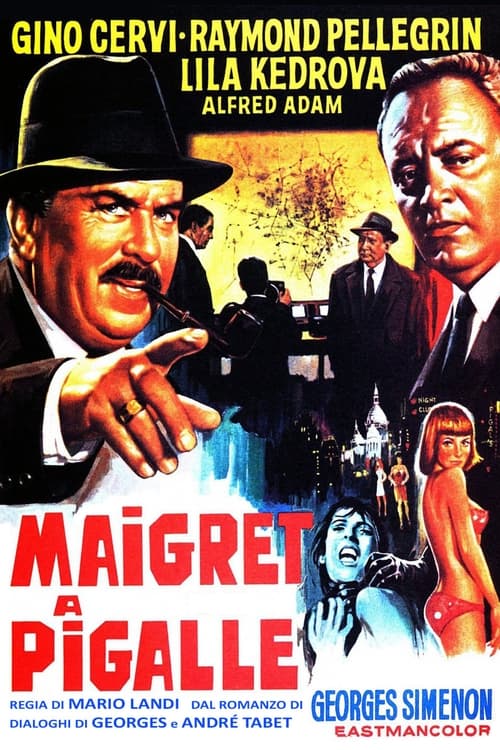
Maigret at the Pigalle
1966
No user ratings available yet
Representation score: 1.8 out of 10

Representation Score
Minimal
1962
Director
Bernard Borderie
Runtime
97 minutes
Average Rating
No ratings yetNew Showbiz Analysis
Ladies' Man is a classic product of its time, adhering closely to mid-century cinematic norms. The plot is driven by traditional archetypes, particularly the charming male protagonist whose social skills shape the film's progression. The film reinforces established social and gender hierarchies rather than challenging them. By focusing on the male lead's romantic pursuits, the narrative maintains a conventional approach to identity and social dynamics. Overall, the film lacks complexity in representing multiple aspects of identity. It remains a straightforward genre piece that reflects the demographic and social uniformity of 1960s French cinema.
Category Breakdown
The film does not include any non-cisgender identities or same-sex relationships. It operates within the assumption that everyone is straight and cisgender.
The story revolves around a male character who is charming and socially adept. Women are portrayed mainly as objects of his pursuit rather than as independent characters.
The cast and setting are homogeneous, reflecting the social strata typical of 1960s French comedy. There is no evidence of diverse racial or cultural backgrounds.
The film upholds the social hierarchies and romantic conventions of the upper-middle class. It does not challenge Western institutions or broader social structures.
The narrative focuses on able-bodied characters engaged in social interactions. There are no visible or invisible disabilities represented among the characters.
Present on Screen
Limited or Absent
Official Synopsis
A famous FBI agent's vacation is interrupted by murder. His investigation leads him on the trail of three women of the local upper middle class.
1966

1983

1960
1946

1954

1941

1963

1948
No reviews yet. Be the first to share your thoughts on this movie!
Use the rating form above to leave a star rating and optional review.