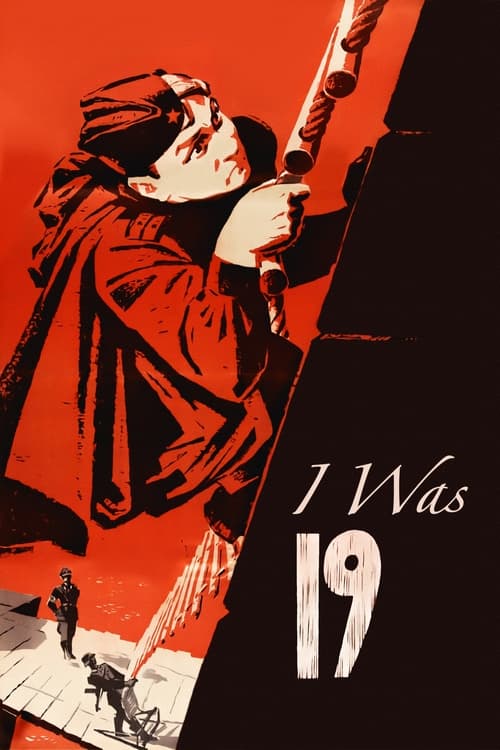
I Was Nineteen
1968
No user ratings available yet
Representation score: 2.9 out of 10
Representation Score
Minimal
1971
Director
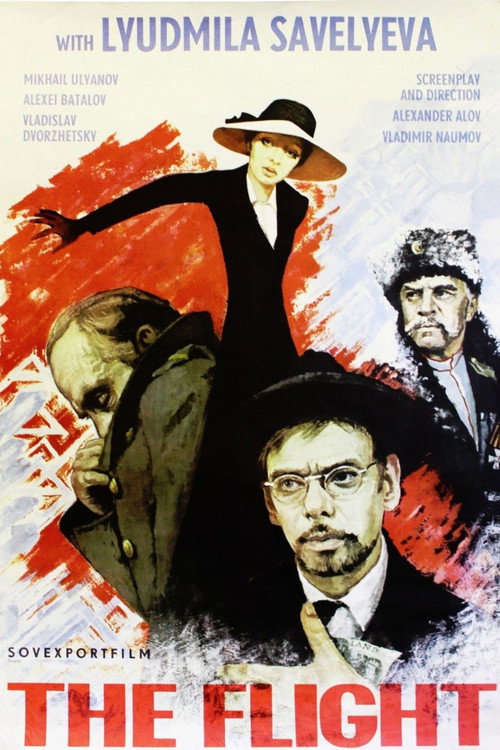
Aleksandr Alov, Vladimir Naumov
Runtime
196 minutes
Average Rating
No ratings yetNew Showbiz Analysis
The Flight is a psychologically dense historical drama that prioritizes existential dread over broad demographic representation. It excels as a complex narrative by dismantling the stability of monarchical and religious structures during the Russian Civil War. However, the film lacks diversity in its casting and character roles, focusing primarily on a homogeneous Slavic experience and male-dominated military hierarchies. While it offers little representation for women, LGBTQ+ individuals, or diverse ethnic groups, the film's strength lies in its morally ambiguous portrayal and subversion of traditional heroic wartime clichés.
Category Breakdown
The film does not include any LGBTQ+ characters or narratives. It adheres to the traditional social frameworks of the early 20th-century military officer class.
The story focuses on male-dominated hierarchies and soldierly brotherhood. Women are portrayed in secondary roles that reinforce traditional domestic or romantic archetypes.
The cast remains relatively homogeneous, emphasizing the Slavic and Russian experience. It does not explore diverse ethnic identities or utilize varied casting.
The film provides a sophisticated look at the collapse of traditional aristocratic institutions. It portrays the end of the White movement as a tragic systemic breakdown.
There is no significant focus on physical or neurodivergent disabilities. These elements are not part of the main character arcs.
Present on Screen
Limited or Absent
Official Synopsis
The film is about a group of people who in other times wouldn't have anything in common, some of them innocent bystanders, some moral criminals. But nothing is straightforward and simple. From Russia "the flight" continues to Constantinople, to Paris, back to Russia. Some of them have understood that they can't live outside Russia and go back maybe to be happy, maybe not, some go back to face sure death for their crimes, some don't go back and know that are going to miss homeland forever, some are comfortably well off (are they?) in exile.
1968
1995
1997

1977
1956
2013

1999

1975
No reviews yet. Be the first to share your thoughts on this movie!
Use the rating form above to leave a star rating and optional review.