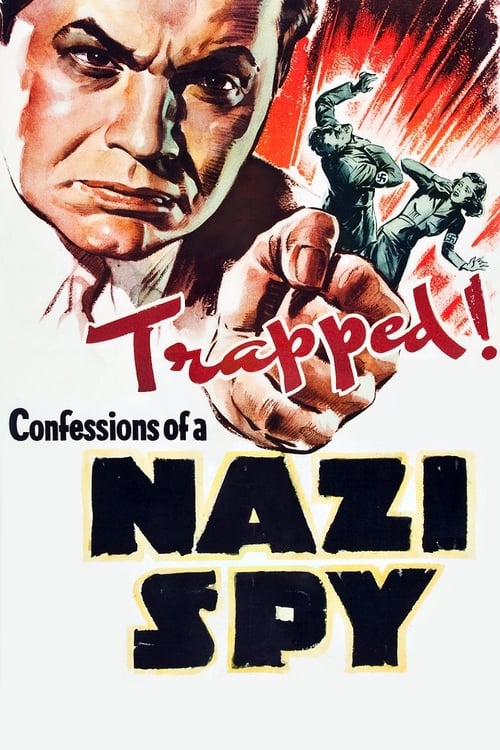
Confessions of a Nazi Spy
1939
No user ratings available yet
Diversity score: 2.6 out of 10

1949
ApprovedDirector
Frank R. Strayer
Runtime
74 minutes
Average Rating
No ratings yetSynopsis
Reverend John Burnside, American missionary in the Far East, prepares to return home after twenty years to take up the fight against Communism. The Reds imprison him and send in his place a spy who is his double, but who is instructed to come out for Communism. The spy is accepted in Burnside's home town, and he reports to local Communist headquarters, where James John, prominent local businessman but in reality a Red agent, has instructions to assist him in all details of his mission. He does a series of personal appearances and radio interviews and talk shows, using an anti-Communist approach.
Overall Score
Limited
Category Breakdown
LGBTQ+ Representation
The film lacks any focus on non-cisnormative identities. It operates within a traditional framework that does not engage with queer themes or identities.
Gender Representation
The plot prioritizes masculine roles of leadership, espionage, and religious authority. It reinforces conventional mid-century depictions of male agency within political spheres.
Racial & Ethnic Diversity
While set in the Far East, the narrative remains centered on Western protagonists. The perspective focuses on the ideological conflict rather than local agency.
Religious & Cultural Diversity
The story centers on defending Western institutions like religious mission work. It reinforces traditional Western values and religious morality against perceived external threats.
Disability Representation
There is no mention of characters navigating physical, neurodivergent, or mental health conditions. Disability is not utilized as a narrative device.
Strengths
Areas for Improvement
AI Analysis
The film functions as a reinforcement of mid-century Western ideological stability. It is designed to uphold traditional religious and political hierarchies through a binary conflict. The narrative lacks intersectional complexity, focusing instead on the struggle between missionary values and Communism. This aligns with the conservative social and political norms of 1949. Ultimately, the film serves as a critique of anti-Western ideologies rather than a deconstruction of them, prioritizing established Western institutions.
1939

1957
1960
1954

1939

1943

1946

1951

1956
1944

1943
1959
No reviews yet. Be the first to share your thoughts on this movie!
Use the rating form above to leave a star rating and optional review.