
Battle at Bloody Beach
1961
No user ratings available yet
Diversity score: 2.9 out of 10
1957
NRDirector
Douglas Sirk
Runtime
109 minutes
Average Rating
No ratings yetSynopsis
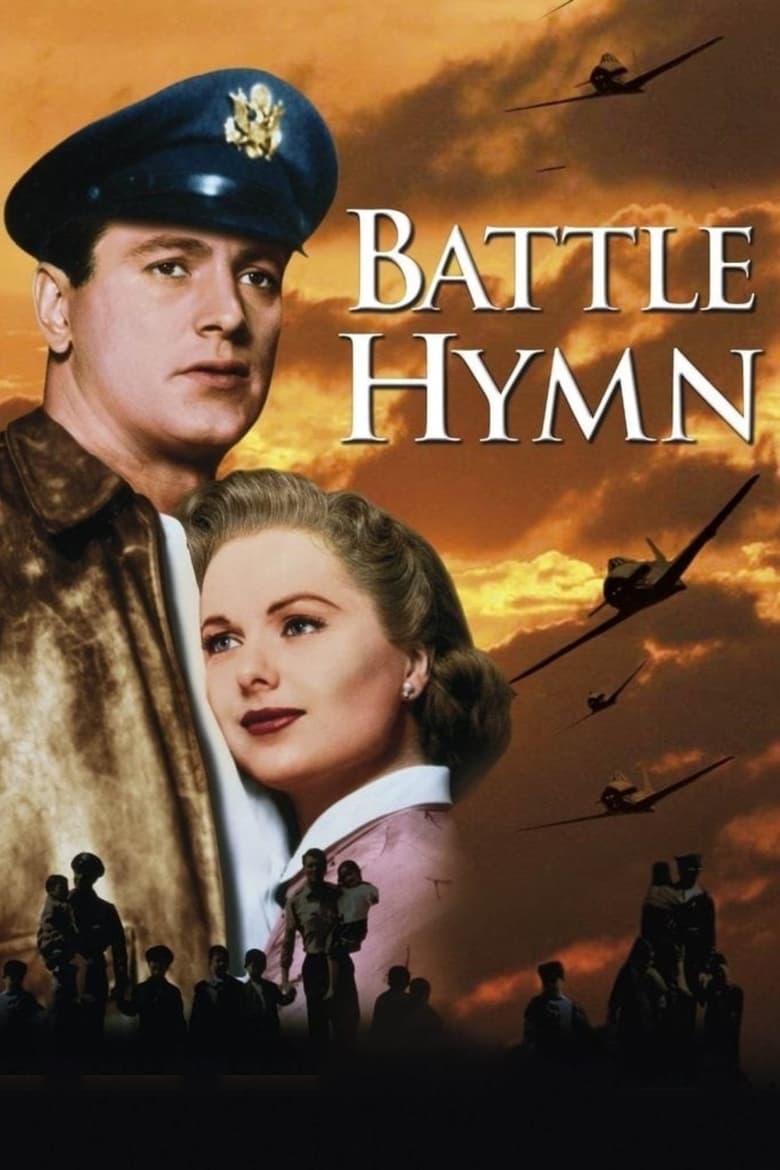
Battle Hymn was inspired by the true story of American minister Dean Hess, played here with rare sensitivity by Rock Hudson. A bomber pilot during World War II, Hess inadvertently releases a bomb which destroys a German orphanage. Tortured by guilt, Hess relocates in Korea after the war to offer his services as a missionary. Combining the best elements of Christianity and Eastern spiritualism, Hess establishes a large home for orphans. The preacher's efforts are threatened when the Korean "police action" breaks out in 1950.
Overall Score
Limited
Category Breakdown
LGBTQ+ Representation
The film adheres to 1950s heteronormative standards. There are no depictions of non-cisnormative identities or same-sex intimacy, focusing instead on traditional romantic structures.
Gender Representation
Gender hierarchies remain traditional, with male characters occupying primary leadership and agency roles. The female lead provides emotional resonance but functions within a supportive, conventional role.
Racial & Ethnic Diversity
The Korean War setting introduces interracial interaction through Korean orphans and a local teacher. However, the narrative remains centered on a white American protagonist and Western paternalism.
Religious & Cultural Diversity
The story is rooted in Western institutional values, specifically military duty and Christian ministry. It portrays Western humanitarian efforts as stabilizing forces rather than critiquing them.
Disability Representation
There are no prominent depictions of physical or neurodivergent disabilities that drive the narrative or serve as central character traits.
Strengths
Areas for Improvement
AI Analysis
Douglas Sirk’s *Battle Hymn* is a conventional mid-century drama that operates within the established social and cinematic norms of 1957. While it moves beyond domestic settings to engage with a foreign landscape and humanitarian themes, it does not challenge the era's fundamental hierarchies. The film prioritizes Western moralities and traditional gender roles. The central arc focuses on a white American protagonist's journey of atonement, which keeps the power dynamics centered on Western intervention rather than local agency.
1961

1955
1949

1950

1949
1953
1959
1955
1967

1962
2009

1946
No reviews yet. Be the first to share your thoughts on this movie!
Use the rating form above to leave a star rating and optional review.