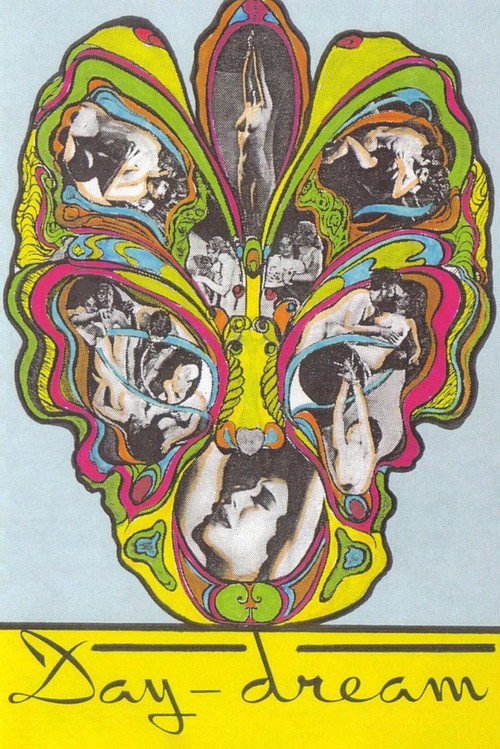
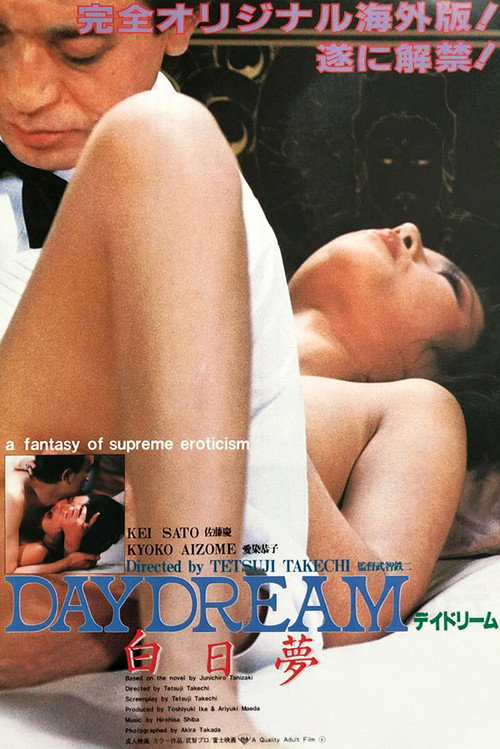
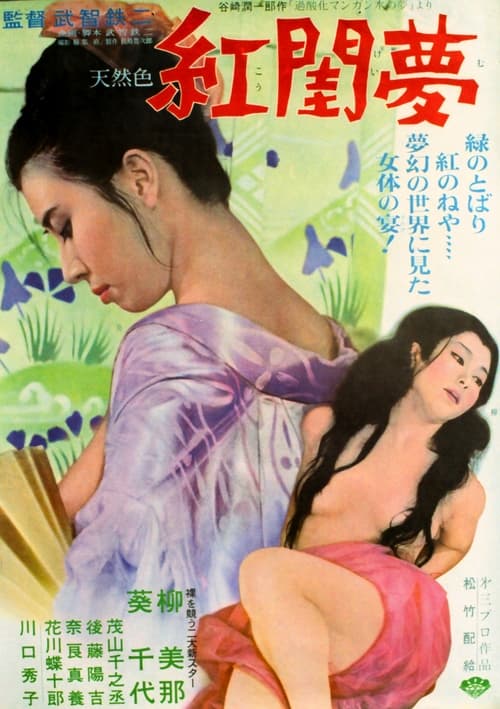
Daydream
1964
No user ratings available yet
Representation score: 7.1 out of 10
Representation Score
Limited
1981
Director
Tetsuji Takechi
Runtime
110 minutes
Average Rating
No ratings yetNew Showbiz Analysis
Day Dream is a psychological horror film that relies heavily on traditional, problematic clichés. The narrative structure is built around the male gaze, centering the story on a man's distorted sexual fantasies. While the film offers a non-Western perspective through its Japanese setting, it lacks depth in terms of characters who reflect more than one aspect of diversity. The female character serves primarily as a vessel for the protagonist's violent hallucinations, lacking autonomy. Ultimately, the film reinforces conventional power hierarchies, prioritizing individual psychological fragmentation over any meaningful exploration of diverse identities or social critique.
Category Breakdown
The film focuses on a heterosexual relationship between a male artist and a female subject. There are no queer narratives or non-cisgender identities present.
The narrative centers on a male protagonist's violent fantasies involving a woman. This framing reinforces harmful power dynamics, treating the female figure as a passive object of male projection.
As a Japanese production, the film provides a non-Western cultural context. However, it does not explicitly engage with multi-layered identity or the subversion of ethnic hierarchies.
The story explores subjective morality and the blurring of reality through hallucinations. It focuses on the internal, subjective experience of the individual rather than socio-political critique.
Anesthesia is used as a plot device to induce an altered state of consciousness. There is no meaningful portrayal of permanent disability or neurodivergent characters with ability to act.
Present on Screen
Limited or Absent
Official Synopsis
While under anesthesia during a tooth extraction, a young man hallucinates a series of darkly sexual fantasies involving an attractive fellow patient and their nefarious dentist.
1964

1969
1987
1973
1966
1982
1999
1964
No reviews yet. Be the first to share your thoughts on this movie!
Use the rating form above to leave a star rating and optional review.