
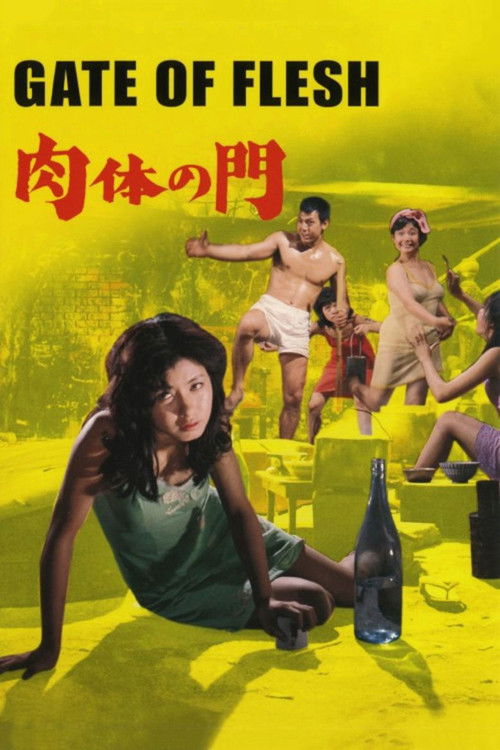
Gate of Flesh
1988
No user ratings available yet
Representation score: 5.2 out of 10
Representation Score
Good
1964
Not RatedDirector
Seijun Suzuki
Runtime
90 minutes
Average Rating
No ratings yetNew Showbiz Analysis
Seijun Suzuki’s drama excels at challenging traditional gender roles by placing women at the center of a chaotic, post-war landscape. Characters take active roles rather than being passive victims. While the film provides a powerful critique of corrupt post-war institutions and the aftermath of global conflict, it lacks explicit LGBTQ+ representation. The focus remains on the transactional and survivalist nature of the black market community. War-related trauma and physical/psychological scars reflect societal decay but do not delve deeply into specific disabilities.
Category Breakdown
The film centers on the survival of sex workers in Tokyo's black markets. It does not focus on queer-coded romantic arcs or non-straight relationships.
Women are portrayed as active agents and primary drivers of the plot's emotional momentum in a female-dominated ecosystem. The narrative challenges traditional gender hierarchies.
Set in post-WWII Japan, the film depicts a culturally homogeneous society centered around the aftermath of global conflict. It avoids Western norms by focusing on a non-Western perspective.
The film portrays the post-war social order as fractured, replacing traditional family units with survival-based communal bonds. It critiques traditional institutions.
War-related physical and psychological scars reflect the era's social decay. These elements mark social standing but do not provide nuanced depictions of specific disabilities.
Present on Screen
Limited or Absent
Official Synopsis
In the shady black markets and bombed-out hovels of post–World War II Tokyo, a tough band of prostitutes eke out a dog-eat-dog existence, maintaining tenuous friendships and a semblance of order in a world of chaos. But when a renegade ex-soldier stumbles into their midst, lusts and loyalties clash, with tragic results. With Gate of Flesh, visionary director Seijun Suzuki delivers a whirlwind of social critique and pulp drama, shot through with brilliant colors and raw emotions.
1988

1973

1960

1949

1960
1988
1955

1960
No reviews yet. Be the first to share your thoughts on this movie!
Use the rating form above to leave a star rating and optional review.