A Hand Shake
1892
No user ratings available yet
Representation score: 0.2 out of 10
Representation Score
Minimal
1894
Not RatedDirector
William K.L. Dickson, William Heise
Runtime
1 minutes
Average Rating
No ratings yetNew Showbiz Analysis
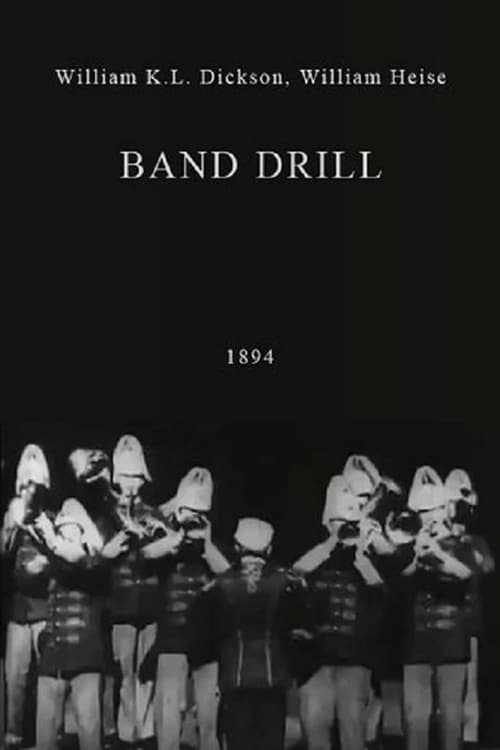
Band Drill serves as a historical archive of 1894 social life rather than a narrative designed for social commentary. As a technical documentation of a brass band performance, it lacks the character's ability to drive the story or dialogue necessary to engage with the way different parts of someone's identity overlap. The film strictly adheres to the period's established hierarchies. It captures a disciplined, traditionalist social order that offers no disruption of the era's gender or racial norms. Ultimately, the work is a reflection of its time, focusing on the functional movement of a musical ensemble within a conventional Western framework.
Category Breakdown
The film functions as a brief documentary recording of a brass band. It contains no evidence of LGBTQ+ identities or narratives addressing the assumption that everyone is straight or cisgender.
The visible subjects are primarily male musicians and a male bandmaster. The performance reinforces 19th-century social structures where public leadership was dominated by men.
The film depicts a standard brass band from a late 19th-century theatrical context. The cast appears homogeneous with no visible evidence of racial diversity.
The content preserves traditional Western institutional performance. It celebrates structured, disciplined social activity rather than offering postmodern or anti-establishment perspectives.
There is no evidence of the presence or depiction of individuals with physical or neurodivergent disabilities.
Present on Screen
Limited or Absent
Official Synopsis
A scene from Charles Hoyt's 'A Milk White Flag': A brass band marches out, led by bandmaster Steele Ayers. When Ayers reaches his position, he turns around and directs the musicians as they take up their own positions.
1892
1899
1899
1891
1896
1898
1890

1896
No reviews yet. Be the first to share your thoughts on this movie!
Use the rating form above to leave a star rating and optional review.