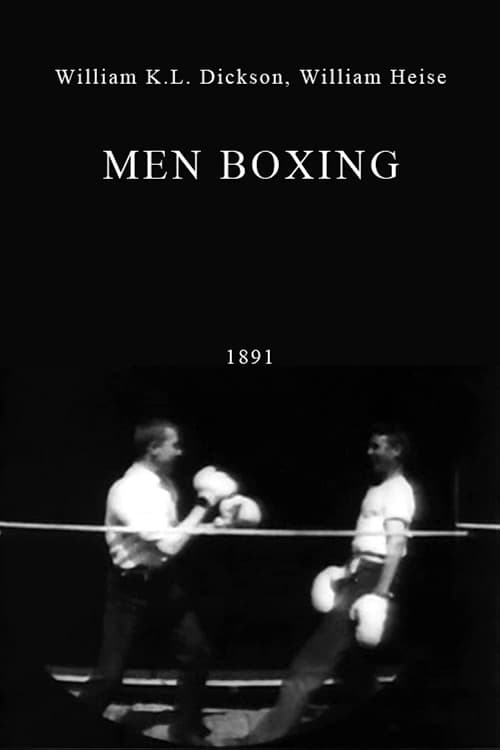
Men Boxing
1891
No user ratings available yet
Representation score: 0.3 out of 10
Representation Score
Minimal
1891
Not RatedDirector
William K.L. Dickson, William Heise
Runtime
1 minutes
Average Rating
No ratings yetNew Showbiz Analysis
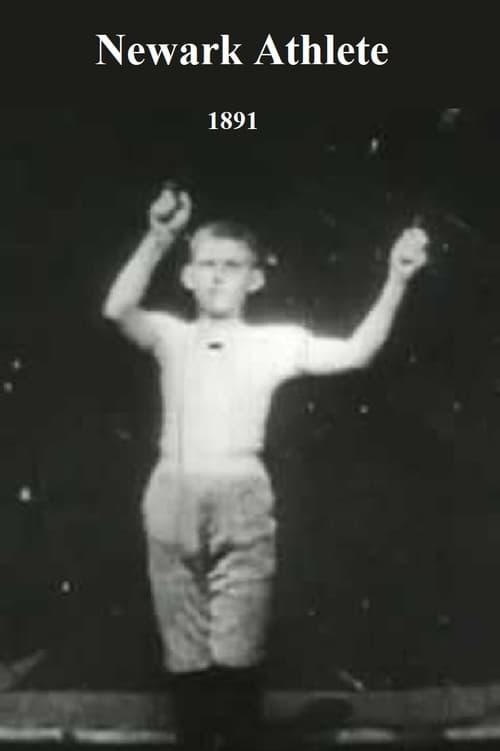
Newark Athlete is a foundational technical artifact rather than a narrative work. Its twelve-second duration focuses entirely on the mechanics of motion and demonstrates the Kinetograph system. Since the film serves as an observational experiment, it lacks the intentionality required for social commentary. The brevity of the clip precludes any complex characterization or engagement with systemic issues. Ultimately, the film's lack of diversity is a result of its function as a technical demonstration of early motion technology.
Category Breakdown
The film is a brief documentary focusing on a single subject. There is no evidence of romantic relationships or subtext suggesting queerness.
The subject is a young athlete performing rhythmic exercise. The performance takes place in a neutral space that neither reinforces nor challenges gender norms.
The identity of the athlete remains unknown. There is insufficient visual evidence to determine the presence of diverse racial or ethnic identities.
The film functions as a simple documentary of physical activity. It lacks the narrative depth needed to explore religious or cultural themes.
The subject performs a coordinated physical task as an athlete. There is no evidence of neurodevelopmental conditions or physical disabilities.
Present on Screen
Limited or Absent
Official Synopsis
Produced May-June 1891, this experimental film fragment was one of the first made in America at the Edison Laboratory in West Orange, N.J. The filmmakers were W.K.L. Dickson and William Heise, both of whom were employed as inventors and engineers in the industrial research facility owned by Thomas Edison. Heise and especially Dickson made important technical contributions during 1891-1893 with a horizontal-feed kinetograph camera and viewer, using 3/4-inch wide film. Leading to the invention of the world’s first successful motion picture camera—the Edison Kinetograph—and to the playback device required for viewing early peepshow films—the Edison Kinetoscope. Named to the National Film Registry in 2010.
1891
1890

1894

1890
1894
1891
1892
1894
No reviews yet. Be the first to share your thoughts on this movie!
Use the rating form above to leave a star rating and optional review.