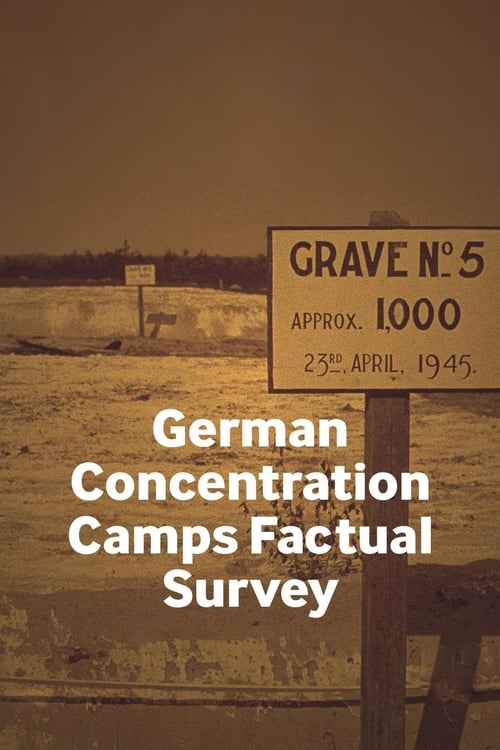
German Concentration Camps Factual Survey
2017
No user ratings available yet
Representation score: 8.5 out of 10
Representation Score
Good
1985
TV-MADirector
Sidney Bernstein
Runtime
58 minutes
Average Rating
No ratings yetNew Showbiz Analysis
Memory of the Camps serves as a devastating historical witness rather than a modern narrative exploration of identity. Its strength lies in its unflinching documentation of the victims of the Nazi regime, ensuring that the systematic targeting of ethnic and religious minorities is preserved for the global conscience. The film captures the multi-layered persecution of race, religion, and physical identity, refusing to sanitize the reality of those targeted by a collapsed social order. However, the work does not engage with contemporary frameworks of representation. It lacks explicit LGBTQ+ narratives and does not utilize gendered clichés, focusing instead on the universal horror of genocide.
Category Breakdown
The documentary focuses on the victims of the Holocaust, primarily through archival footage and testimonies that do not center on queer narratives or non-cisgender identities.
The film presents the lived experiences of men, women, and children through a lens of shared suffering. It avoids traditional gender hierarchies but does not provide individual gender ability to act.
This vital record centers the identities of Jewish populations, Roma, and other ethnic minorities. It provides high ability to act by documenting the scale of their persecution.
The film critiques state-sponsored totalitarianism and the collapse of Western morality. It exposes the moral vacuum created by the Third Reich through systemic victimhood.
The film provides visceral documentation of prisoners suffering from starvation and chronic illness. It grants visibility to those with physical disabilities resulting from systemic abuse.
Present on Screen
Limited or Absent
Official Synopsis
In 1945, Allied troops invaded Germany and liberated Nazi death camps. They found unspeakable horrors which still haunt the world’s conscience. A film was made by British and American film crews who were with the troops liberating the camps. It was directed in part by Alfred Hitchcock and was broadcast for the first time in its entirety on PBS FRONTLINE in 1985.
2017
1998

1945
1985
2021
2000
1982
1974
No reviews yet. Be the first to share your thoughts on this movie!
Use the rating form above to leave a star rating and optional review.