
At the Meeting with Joyous Death
1973
No user ratings available yet
Representation score: 2.4 out of 10
Representation Score
Minimal
1965
Director
Carlos Schlieper, Carlos Hugo Christensen, Jerry Warren
Runtime
67 minutes
Average Rating
No ratings yetNew Showbiz Analysis
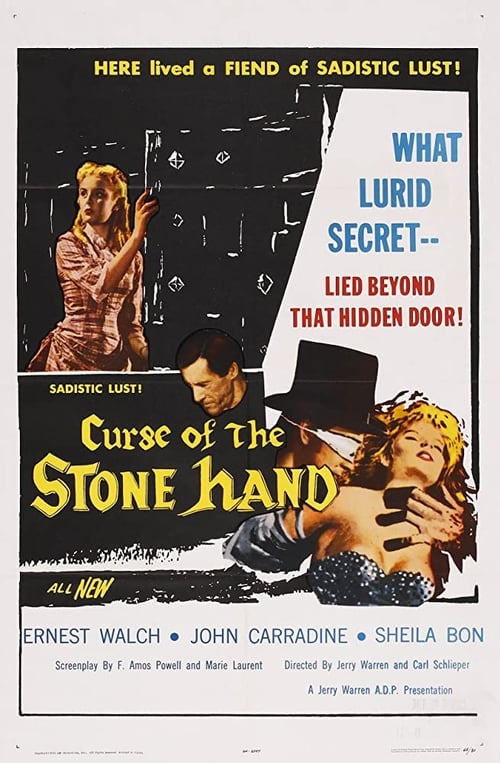
Curse of the Stone Hand is a unique blend of two Chilean films edited with new American footage. This transnational approach sets it apart from typical Hollywood productions of the time. However, the film remains a conventional genre piece. It does not challenge social hierarchies or disrupt traditional frameworks, instead sticking to established mid-century clichés and dramatic conventions. Ultimately, the film serves as a commercial product that adheres to genre expectations rather than progressive representation or narrative innovation.
Category Breakdown
The film does not depict any non-binary gender identities or same-sex relationships. It follows the typical straight-centered assumptions common in 1960s horror and drama.
Female characters seem to fit into traditional roles like victims or femme fatales. The story does not challenge these gender stereotypes.
The film's combination of Chilean and American influences provides a mix of cultures. However, the additional American footage likely reflects the era's standard racial hierarchies.
Themes focus on gothic horror and personal tragedy rather than broader social critiques. The story leans towards traditional moral and fate-based narratives rather than secular or anti-Western themes.
There is no exploration of neurodivergence or physical disabilities. Characters are not driven by these traits.
Present on Screen
Limited or Absent
Official Synopsis
Hands sculpted in stone, hidden in the niches of an ancient house, are regarded as sources of a curse by the present inhabitant, a country gambling addict. Indeed, he goes to an early grave after experiencing bankruptcy. The house passes to another family, one of whose sons becomes obsessed with the hands. (A cross-editing of principal material from two Chilean films, LA CASA ESTA VACIA and LA DAMA DE LA MUERTE, with the addition of new American-made footage, to create a single story.)
1973
1928
1984
2013
1974
1955

1962

1976
No reviews yet. Be the first to share your thoughts on this movie!
Use the rating form above to leave a star rating and optional review.