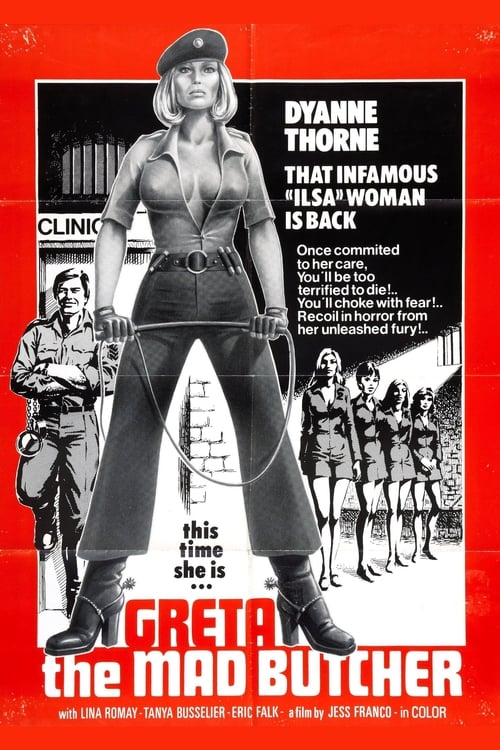
Greta, the Mad Butcher
1977
No user ratings available yet
Diversity score: 5.4 out of 10

1973
Director
Jesús Franco
Runtime
81 minutes
Average Rating
No ratings yetSynopsis
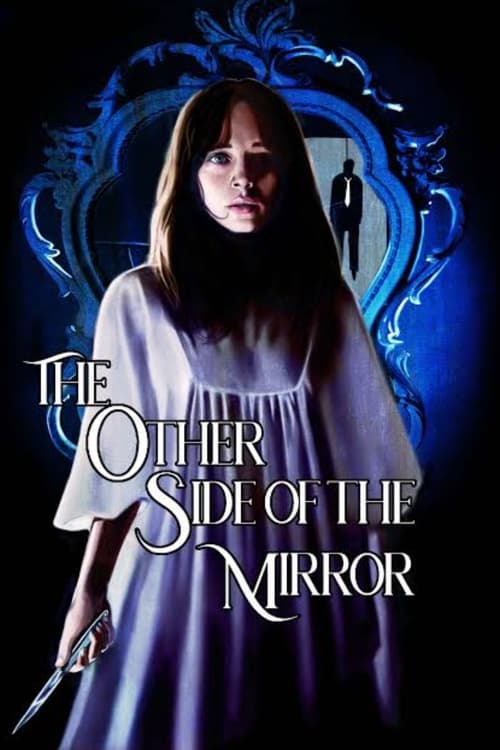
Amid the craggy, dusty hills of southern France, a woman screams in the night. Gorgeous Melissa Comfort, a wealthy heiress confined to a wheelchair since birth, cries out in her nightmares, terrified of a dream that comes night after night. In this night terror, she's 10-years-old. Running from a man who may or may not be her father.
Overall Score
Fair
Category Breakdown
LGBTQ+ Representation
The film lacks explicit evidence of LGBTQ+ characters or non-heteronormative identities. The narrative focuses on a traditional familial mystery, leaving queer identity unaddressed.
Gender Representation
Melissa Comfort serves as the central protagonist, driving the psychological mystery. While she is depicted in a vulnerable state, her internal life provides a departure from passive archetypes.
Racial & Ethnic Diversity
Set in southern France, the film appears to reflect a Western European context. There is no evidence of significant racial blending or diverse casting within the narrative.
Religious & Cultural Diversity
The story prioritizes psychological realism and moral ambiguity over religious or communal resolutions. It explores individual trauma through a secular, character-driven lens.
Disability Representation
The protagonist's lifelong use of a wheelchair is a core component of her identity and the plot. Her physical condition is central to the film's tension.
Strengths
Areas for Improvement
AI Analysis
The film offers a moderate level of representation by centering its narrative on a female protagonist with a significant physical disability. This focus provides psychological depth and moves away from standard heroic tropes. However, the work lacks intersectional breadth. The setting and character profiles suggest a homogeneous Western European environment, and there is no visible engagement with LGBTQ+ identities or diverse racial backgrounds. Ultimately, while the film avoids simple moral lessons in favor of complex character studies, it does not actively subvert social hierarchies or provide a wide spectrum of diverse identities.
1977
1973

1997

1975

1976

1973

1978

1973
1965

1980

1973

1970
No reviews yet. Be the first to share your thoughts on this movie!
Use the rating form above to leave a star rating and optional review.