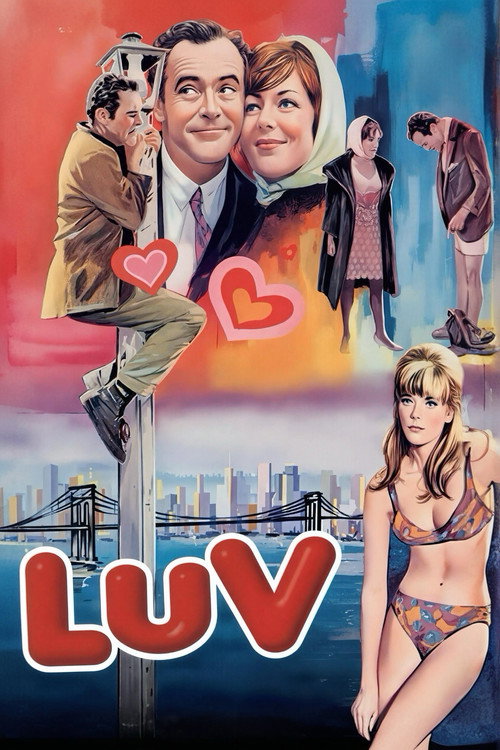
Luv
1967
No user ratings available yet
Representation score: 4.8 out of 10
Representation Score
Fair
1972
PGDirector
Elaine May
Runtime
105 minutes
Average Rating
No ratings yetNew Showbiz Analysis
Elaine May’s film deconstructs romantic clichés, emphasizing psychological realism over traditional happy endings. It offers a cynical view of Western social institutions and the stability of the nuclear family. However, the film focuses on a narrow demographic. It lacks meaningful representation of LGBTQ+ individuals, diverse racial identities, or characters with disabilities, operating within a strictly white, straight-centered framework. Ultimately, the work prioritizes thematic depth over demographic breadth, exploring the breakdown of commitment and individual neurosis through a limited social lens.
Category Breakdown
The film follows traditional heterosexual romance patterns. There are no non-binary gender identities or same-sex relationships shown.
Lenny breaks the typical husband stereotype through his emotional instability. Female characters mainly act as triggers for his problems rather than having their own roles.
The setting is mostly white and middle-class. The story doesn't engage with diverse racial backgrounds or cultures.
The film questions the sanctity of marriage and the nuclear family. It presents a world where social contracts are morally ambiguous and disillusioned.
Lenny’s severe mental issues drive the dark humor and character conflicts. The film doesn’t offer detailed stories for characters with disabilities.
Present on Screen
Limited or Absent
Official Synopsis
Three days into his Miami honeymoon with needy and unsophisticated Lila, Lenny meets tall, blonde Kelly. This confirms his fear that he has made a serious mistake and he decides he wants to be with Kelly instead.
1967
1989

1961
1964
1968
1969
1992
1963
No reviews yet. Be the first to share your thoughts on this movie!
Use the rating form above to leave a star rating and optional review.