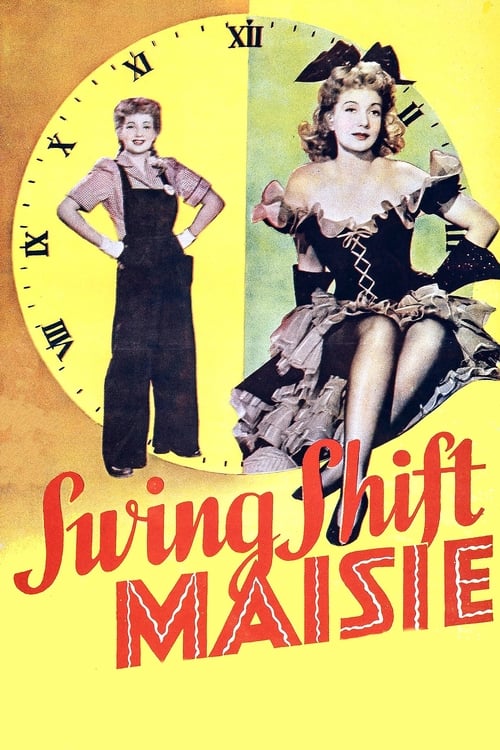
Swing Shift Maisie
1943
No user ratings available yet
Representation score: 2.1 out of 10
Representation Score
Minimal
1943
ApprovedDirector
George Stevens
Runtime
104 minutes
Average Rating
No ratings yetNew Showbiz Analysis
The film focuses on the social cohesion of the American home front during World War II. It captures the domestic life and economic struggles of the time without challenging the status quo. While it presents nuanced characters dealing with wartime scarcity, it adheres closely to the social norms of 1943. Ultimately, it reflects a singular cultural perspective typical of its era.
Category Breakdown
The film strictly follows the social structures of the 1940s, where everyone is assumed to be straight and cisgender. There is no indication of diverse sexual orientations or gender identities.
Connie Milligan drives the plot by managing both domestic and economic challenges. Women in the film show practical competence, but the story ends with traditional romantic expectations.
The cast mainly features white, middle-class characters living in urban settings. The film does not intentionally include diverse racial or ethnic backgrounds, reflecting the demographic homogeneity of the time.
The story emphasizes Western institutions and patriotism through themes of social cooperation and domestic stability. It portrays these elements as stabilizing forces without questioning traditional structures.
There are no prominent characters with visible or invisible disabilities that play key roles in the narrative or define central traits.
Present on Screen
Limited or Absent
Official Synopsis
It's World War II and there is a severe housing shortage everywhere - especially in Washington, D.C. where Connie Milligan rents an apartment. Believing it to be her patriotic duty, Connie offers to sublet half of her apartment, fully expecting a suitable female tenent. What she gets instead is mischievous, middle-aged Benjamin Dingle. Dingle talks her into subletting to him and then promptly sublets half of his half to young, irreverent Joe Carter - creating a situation tailor-made for comedy and romance.
1943

1944
1951
1940

1943
1942

1947
1949
No reviews yet. Be the first to share your thoughts on this movie!
Use the rating form above to leave a star rating and optional review.