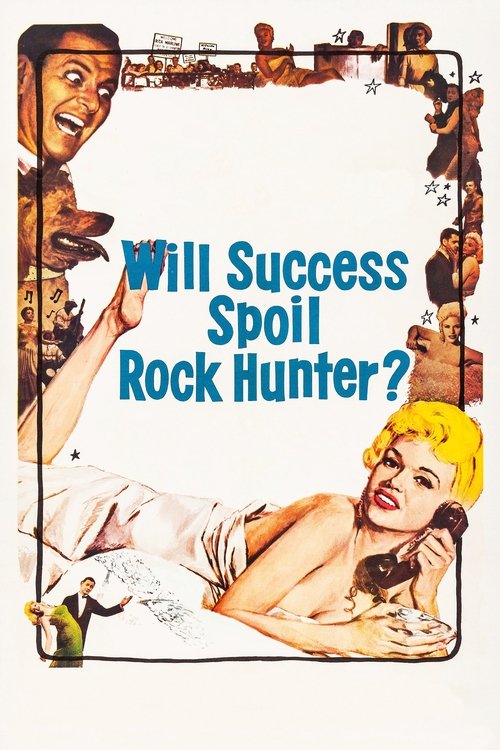
Will Success Spoil Rock Hunter?
1957
No user ratings available yet
Representation score: 2.7 out of 10

Representation Score
Minimal
1954
NRDirector
George Cukor
Runtime
86 minutes
Average Rating
No ratings yetNew Showbiz Analysis
George Cukor’s direction highlights complex character interactions, especially through a female protagonist navigating the advertising industry with professional ambition. This portrayal grants the main character a level of influence unusual for the era’s typical submissive female roles. However, the film remains firmly rooted in the conventions of Classical Hollywood, emphasizing homogeneity and reinforcing traditional social hierarchies. The lack of multi-layered complexity confines the narrative within narrow social boundaries. Ultimately, while the film introduces a career-driven heroine who challenges standard romantic clichés, it fails to address issues of racial diversity, disability, or LGBTQ+ representation.
Category Breakdown
The film follows strict 1950s norms, focusing solely on heterosexual relationships and traditional family structures. There is no representation of LGBTQ+ identities or same-sex relationships.
The protagonist challenges traditional gender roles through her professional success and intellect. However, her character arc still centers on achieving a conventional romantic relationship.
The film features a primarily white, Anglo-Saxon cast, with no significant roles for characters of diverse racial backgrounds.
The narrative emphasizes mid-century Western social norms and conventional morality, focusing on social status and romantic stability without questioning broader societal structures.
The film does not include any characters with visible or invisible disabilities, depicting all characters as fully able-bodied.
Present on Screen
Limited or Absent
Official Synopsis
Gladys Glover has just lost her modeling job when she meets filmmaker Pete Sheppard shooting a documentary in Central Park. For Pete it's love at first sight, but Gladys has her mind on other things, making a name for herself. Through a fluke of advertising she winds up with her name plastered over 10 billboards throughout city.
1957
1934
1951
1940
1942
1958
1953

1937
No reviews yet. Be the first to share your thoughts on this movie!
Use the rating form above to leave a star rating and optional review.