
Andy Warhol
1965
No user ratings available yet
Diversity score: 4.7 out of 10
1952
Director
Jean Cocteau
Runtime
36 minutes
Average Rating
No ratings yetSynopsis
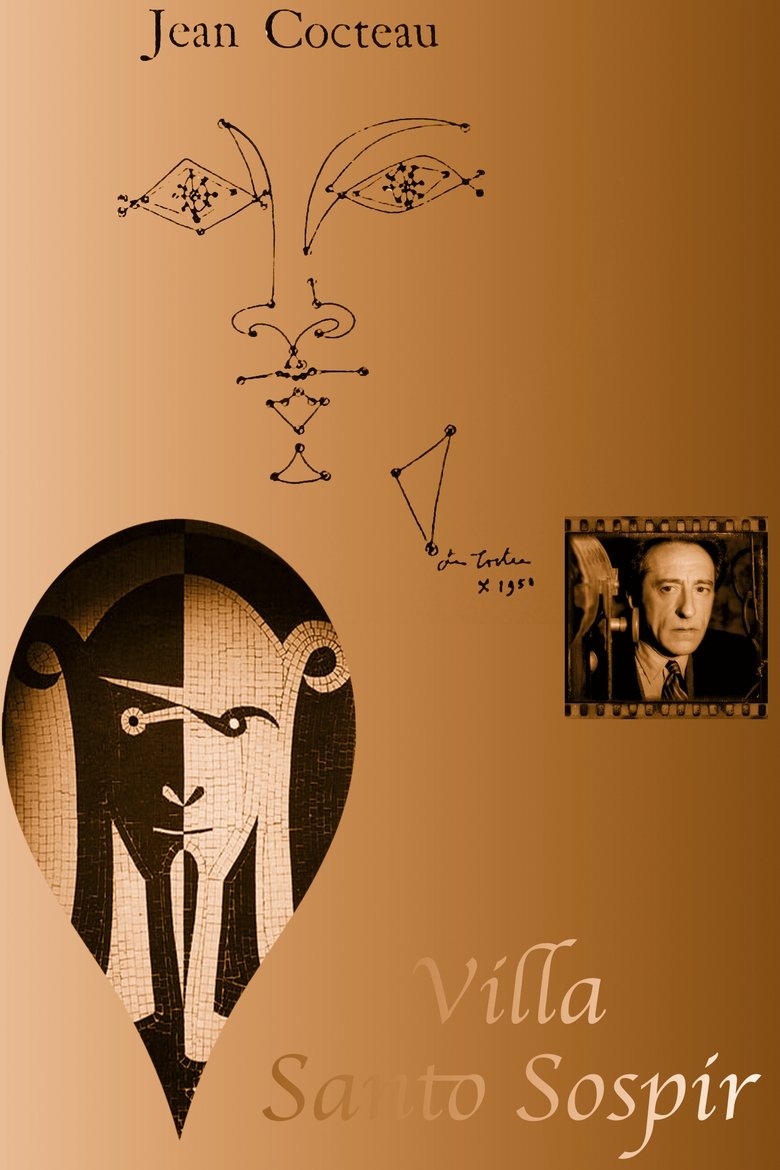
Cocteau takes the viewer on a tour of a friend's villa on the French coast (a major location used in Testament of Orpheus). The house itself is heavily decorated, mostly by Cocteau (and a bit by Picasso), and we are given an extensive tour of the artwork. Cocteau also shows us several dozen paintings as well. Most cover mythological themes, of course. He also proudly shows paintings by Edouard Dermithe and Jean Marais and plays around his own home in Villefranche.
Overall Score
Fair
Category Breakdown
LGBTQ+ Representation
The film lacks explicit romantic narratives but features the artwork of Jean Marais, Cocteau's frequent collaborator and partner. This inclusion suggests a space built on queer aesthetic sensibilities and shared creative intimacy.
Gender Representation
The work operates within a male-centric artistic tradition, focusing on the creator's genius and mythic themes. While surrealist decorations subvert some classical hierarchies, there is little visible agency for female subjects.
Racial & Ethnic Diversity
The film is deeply rooted in a specific European, Mediterranean aesthetic. It focuses on Western mythological themes and Cocteau's personal circle, resulting in a lack of racial or ethnic intersectionality.
Religious & Cultural Diversity
Cocteau challenges institutional norms by prioritizing subjective, surrealist truth over objective reality. By centering an idiosyncratic private space, the film promotes aesthetic relativism and a fluid interpretation of reality.
Disability Representation
There is no evidence of characters or subjects portraying physical or neurodivergent disabilities within the film.
Strengths
Areas for Improvement
AI Analysis
La Villa Santo-Sospir functions as a semiotic exploration of curated space rather than a character-driven narrative. The film's strength lies in its intellectual subversion and its use of surrealism to deconstruct classical myths through an avant-garde lens. However, the work is limited by the historical and stylistic constraints of its era. It lacks demographic breadth, focusing almost exclusively on a specific European aesthetic and a narrow circle of artistic collaborators. Ultimately, the film is a highly personal, non-conformist study of art and architecture. It prioritizes aesthetic experimentation over the diverse human representation found in traditional cinema.
1965
1968
1997
1970

2010
2009
1950
1986

1984
1978
2018

2021
No reviews yet. Be the first to share your thoughts on this movie!
Use the rating form above to leave a star rating and optional review.