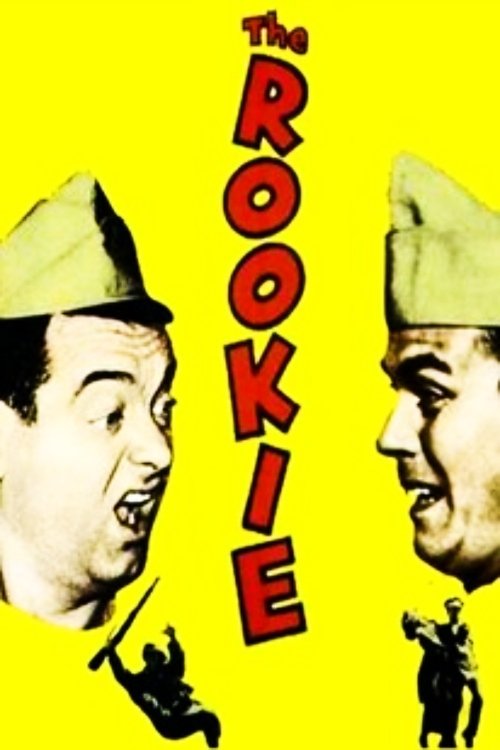
The Rookie
1959
No user ratings available yet
Representation score: 1.3 out of 10
Representation Score
Minimal
1957
NRDirector
George Marshall
Runtime
98 minutes
Average Rating
No ratings yetNew Showbiz Analysis
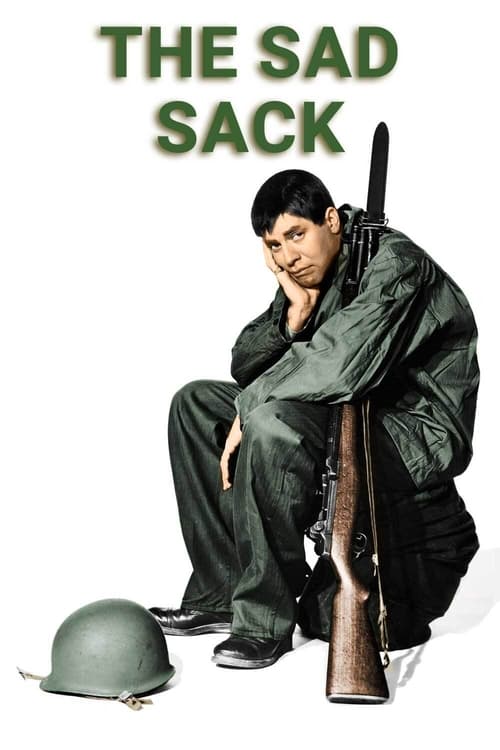
The Sad Sack is a product of its 1957 context, prioritizing slapstick humor and established social hierarchies over demographic complexity. The film functions as a standard genre piece that reinforces the prevailing social order of the era. While the inclusion of a female officer offers a minor shift in power dynamics, the narrative remains anchored in a male-dominated military environment. Cultural diversity is limited to exoticized settings that serve the protagonist's comedic journey rather than offering meaningful representation. Ultimately, the film lacks depth in representing diverse identities, relying on traditional archetypes that do not challenge the racial or gendered status quo of the mid-century period.
Category Breakdown
The film does not include any visible LGBTQ+ characters or non-assuming gender matches what was assigned at birth identities. It focuses on traditional romantic relationships.
The story centers around male characters and reinforces patriarchal military structures. WAC Major Shelton provides intellectual authority but her role remains supportive within a male-dominated plot.
The cast is mostly homogeneous, reflecting 1950s cinematic norms. Moroccan elements and the character Zita are used as exoticized backdrops for comedy, lacking deeper representation.
The narrative aligns with mid-century Western values and institutional stability. It focuses on the protagonist's struggle with military order and lacks engagement with secularism or critiques of Western morality.
The film does not depict physical, sensory, or neurodivergent disabilities. The protagonist's clumsiness is treated as a comedic archetype without a nuanced exploration of disability.
Present on Screen
Limited or Absent
Official Synopsis
Private Meredith Bixby is so out of step in the Army that his six weeks of planned basic training has now stretched to 17 months. After he loses a tank, WAC Major Shelton, a psychologist, is assigned to make a good soldier out of him. She requests Corporal Dolan and Private Stan Wensalawsky to help with the training. Dolan and Stan both have scores to settle with Bixby and their "guidance" leads to more mishaps. Sergeant Pulley has them shipped out to Morocco. On leave in North Africa, Bixy wanders alone into a bar, has a few Moroccan Delights, which he thinks are malted milks, and becomes convinced that exotic singer-dancer Zita is THE girl for him.
1959
1944
1956

1973
1952
1959
1950

1999
No reviews yet. Be the first to share your thoughts on this movie!
Use the rating form above to leave a star rating and optional review.