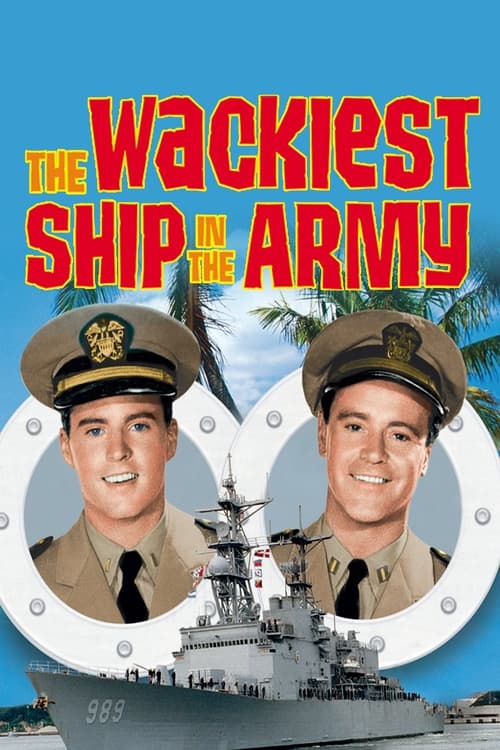
The Wackiest Ship in the Army
1960
No user ratings available yet
Representation score: 1.7 out of 10

Representation Score
Minimal
1964
ApprovedDirector
George Marshall
Runtime
97 minutes
Average Rating
No ratings yetNew Showbiz Analysis
Advance to the Rear is a traditional mid-century comedy that sticks closely to the social and narrative norms of its time. The film uses well-known genre clichés to create a light-hearted war plot, offering little in the way of social critique. The narrative structure reinforces conventional expectations about gender, race, and institutional authority. By focusing on male characters and standard military goals, the film maintains the status quo typical of 1960s Hollywood productions. Overall, the film does not aim to include diverse identities, functioning as a typical comedy of its era that avoids questioning the cultural or political institutions it portrays.
Category Breakdown
The film does not include any LGBTQ+ characters or non-straight relationships. It follows the traditional romantic storylines of the mid-1960s.
The story focuses on male characters, with females playing minor roles often involving deception. Martha Lou Williams' role as a Confederate agent follows typical period stereotypes.
The cast is homogeneous, following the casting standards of 1960s studio films. There are no significant racial blends or non-white casts in this Civil War setting.
The plot upholds traditional Western institutions through the protection of the U.S. Treasury. It does not question the morality of military actions or patriotic ideals.
There are no visible or hidden disabilities shown in the main characters. Characters are defined by their military abilities or shortcomings rather than physical or cognitive differences.
Present on Screen
Limited or Absent
Official Synopsis
As punishment for their incompetence in battle, disgraced Union soldier Capt. Jared Heath and his apathetic commanding officer, Col. Claude Brackenbury, are reassigned away from the front lines. The hapless Heath and Brackenbury must now lead a ragtag group on a classified mission to protect a transport for the U.S. Treasury. Complicating matters is Martha Lou Williams, a Confederate agent posing as a lady of the evening.
1960
1959
1959

1973
1952
1949
1956
1970
No reviews yet. Be the first to share your thoughts on this movie!
Use the rating form above to leave a star rating and optional review.