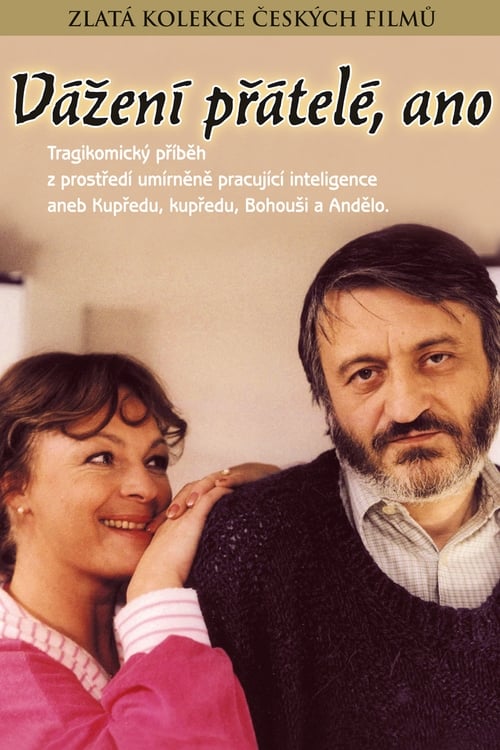
Vážení přátelé, ano
1989
No user ratings available yet
Representation score: 4.0 out of 10
Representation Score
Fair
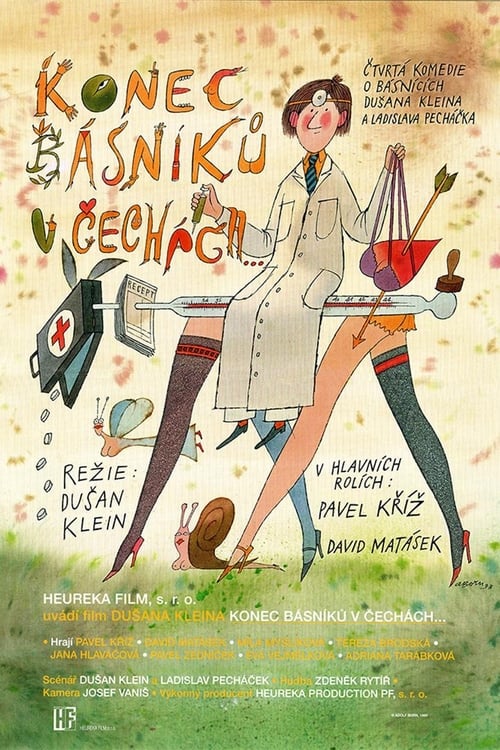
1993
Director
Dušan Klein
Runtime
104 minutes
Average Rating
No ratings yetNew Showbiz Analysis
Konec básníků v Čechách... is a period-specific social critique that focuses on systemic commentary rather than demographic diversity. Its strength lies in its cultural representation, particularly in challenging the ethics of new capitalism during the post-Velvet Revolution era. However, the film lacks broad representation of LGBTQ+ identities or diverse racial backgrounds. The narrative is centered on a male protagonist and follows traditional romantic structures, offering limited representation for women and diverse gender roles. Ultimately, the film's strength is in its ideological depth, while its area for improvement is in expanding demographic inclusivity.
Category Breakdown
The film centers on a heterosexual relationship between Dr. Štěpán and a young woman. There are no characters or narratives that challenge LGBTQ+ identities.
The story revolves around a male protagonist facing ethical dilemmas. While the female lead influences his journey, her role and ability to act remain unclear.
Set in 1993 Czech Republic, the film highlights local social changes. It does not include multicultural elements or non-white actors, reflecting the era's homogeneous ethnic makeup.
The narrative strongly critiques emerging capitalist institutions, emphasizing individual morality over market-driven success. It challenges the celebratory clichés of Western economic expansion.
There are no visible or invisible disabilities mentioned in the story. The film does not feature any characters with disabilities.
Present on Screen
Limited or Absent
Official Synopsis
Dr. Štěpán, dismissed for his outspokenness, returns to his hometown determined not to bend his ethical principles to the ruthless new capitalism surrounding him. When he meets a young woman who may become the meaning of his life, he must confront the tension between his ideals and the demands of a changing world.
1989
1967
1995

1965
1990

2008
1988
2003
No reviews yet. Be the first to share your thoughts on this movie!
Use the rating form above to leave a star rating and optional review.