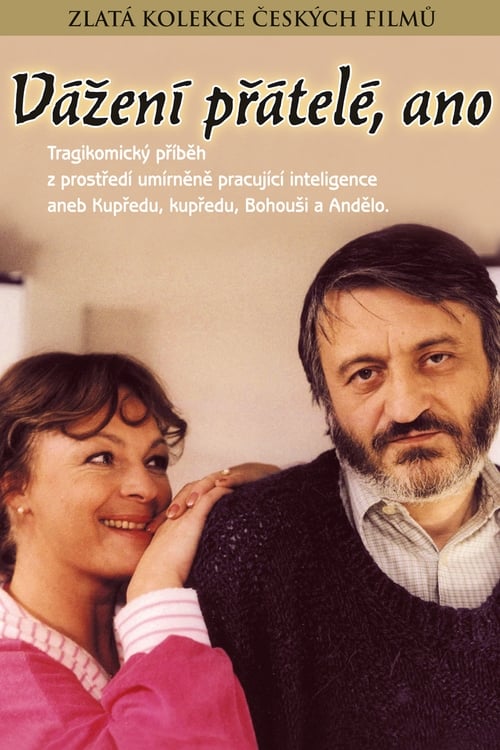
Vážení přátelé, ano
1989
No user ratings available yet
Representation score: 4.0 out of 10
Representation Score
Limited
1988
Director
Dušan Klein
Runtime
102 minutes
Average Rating
No ratings yetNew Showbiz Analysis
How Poets Are Enjoying Their Lives is a character-driven social comedy that emphasizes professional ethics and romantic fulfillment. Its narrative structure is deeply tied to the social and cultural norms of 1988 Czechoslovakia, focusing on local human experiences. While the film delves into the tension between individual ideals and institutional norms, it lacks complexity in addressing multiple aspects of identity. The storytelling adheres to conventional formulas of the time, especially concerning gender roles and romantic development. Ultimately, the film serves as a traditional exploration of social integration. It lacks the demographic diversity or subversive identity politics needed to transcend its regional, homogeneous context.
Category Breakdown
The film follows a typical romantic storyline focused on the protagonist and a female counterpart. It does not include narratives involving non-straight or non-cisgender identities or challenge the assumption that everyone is straight or cisgender.
The story centers on the male lead's professional journey and conflicts with male superiors. The female lead primarily serves as a catalyst for the protagonist's personal life and relocation.
Set in rural Bohemia in 1988, the film reflects the area's demographics. There is no indication of diverse ethnic representation or casting actors with different backgrounds.
The narrative explores the conflict between individual morality and bureaucratic systems. It subtly critiques institutional rigidity through the protagonist's interactions with established colleagues.
There is no information about characters with visible or invisible disabilities.
Present on Screen
Limited or Absent
Official Synopsis
While Kendy returns to his hometown as an assistant director to film a thirteen-part series with a television crew, Štěpán Šafránek, equipped with his mother's advice after graduation, takes up his first position - as an intern at the local hospital. However, his inadaptability to local conditions and his sense of ethics in his chosen profession do not suit his other established colleagues. While they are amused by his zeal and responsibility, Štěpán has increasing problems with his superiors, until he is finally transferred to the position of rural district doctor, which everyone rejects. In Bezdíkov, however, he meets a new, perhaps permanent and reciprocated love, with whom he eventually decides to live and work in northern Bohemia.
1989
1967
1985
2016
2010
1993
1976
1985
No reviews yet. Be the first to share your thoughts on this movie!
Use the rating form above to leave a star rating and optional review.