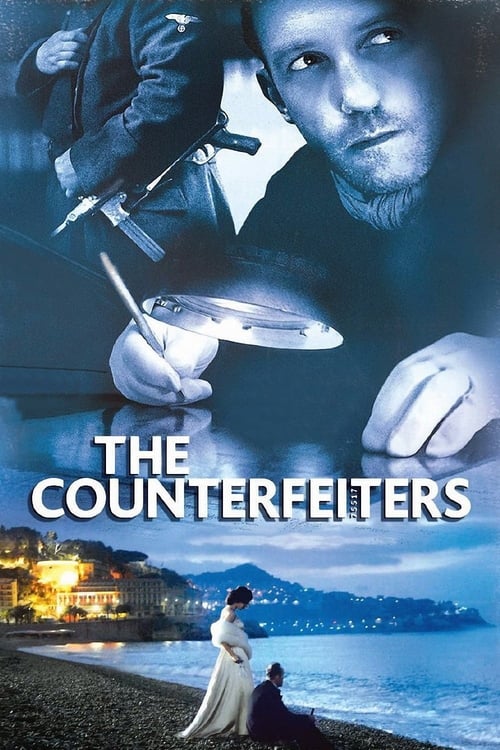
The Counterfeiters
2007
No user ratings available yet
Representation score: 6.2 out of 10

Representation Score
Good
2010
Not RatedDirector
Oskar Roehler
Runtime
114 minutes
Average Rating
No ratings yetNew Showbiz Analysis
Oskar Roehler’s drama is a sophisticated meta-narrative that explores the intersection of art, propaganda, and personal ethics. By focusing on an actor's involvement in Nazi propaganda, the film avoids simple hero-villain clichés to study how individual ability to act erodes under state-mandated ideology. The film achieves its impact by deconstructing the mechanisms of systemic oppression. While it does not engage with modern identity politics like queer theory, it excels in its rigorous critique of traditional Western power structures and institutional corruption. Ultimately, the work highlights the destruction of the individual by the state. It provides a profound study of how institutional power is weaponized against underrepresented groups, making it a powerful critique of historical authority.
Category Breakdown
The film does not include explicit LGBTQ+ identities or stories that go beyond assuming everyone is straight. It centers on the marriage between Ferdinand and Anna to explore the consequences of state persecution.
The story challenges traditional gender roles by emphasizing the moral weight of the female experience. Anna serves as the narrative's moral compass and a primary victim of systemic forces.
Jewish characters play significant roles, especially Anna, who drives the narrative with her experiences. The film critiques 1940s socio-political structures rather than treating Jewish characters as a monolithic group.
The narrative portrays Western institutions and propaganda machines as predatory. It favors individual conscience over state-mandated patriotism or nationalist dogma, breaking down the era's heroic myths.
There are no prominent depictions of visible or invisible disabilities that drive the narrative or serve as central character traits.
Present on Screen
Limited or Absent
Official Synopsis
This intricate historical drama tells the story of actor Ferdinand Marian (Tobias Moretti), who is ordered by Nazi propagandist Joseph Goebbels to star in the 1940 anti-Semitic film Jew Suss. Despite his cooperation, Ferdinand's actions have unexpected costs. Ferdinand's Jewish wife, Anna (Martina Gedeck), is sent to a concentration camp, and as World War II intensifies, he rebels against the Nazis, leading to the destruction of his career.
2007

1965
1992
1974

2004
2002
2001

1997
No reviews yet. Be the first to share your thoughts on this movie!
Use the rating form above to leave a star rating and optional review.