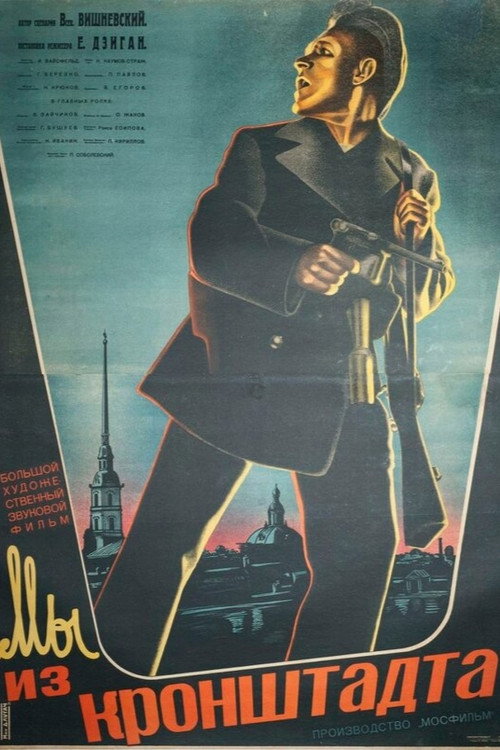
We Are from Kronstadt
1936
No user ratings available yet
Representation score: 3.3 out of 10

Representation Score
Limited
1936
Director
Pierre Unik, Henri Cartier-Bresson, Jean Renoir, Jacques Becker, Jacques Brunius, Jean-Paul Le Chanois, Maurice Lime, André Zwobada
Runtime
66 minutes
Average Rating
No ratings yetNew Showbiz Analysis
Life Is Ours is a landmark documentary anthology that uses social realism to center the lives of the working class. By shifting the focus from the elite to the collective, it disrupts traditional cinematic hierarchies and provides a powerful critique of capitalist structures. However, the film is limited by its era and specific ideological focus. It lacks broad representation of LGBTQ+ identities and significant racial diversity. Ultimately, it serves as a potent historical tool for class empowerment, even though it falls short of modern multi-layered standards.
Category Breakdown
The film does not include any characters or stories related to LGBTQ+ identities. It focuses solely on the working-class conditions and class struggles.
Women are shown as active participants in the labor force and class struggle, rather than being confined to domestic roles. The film avoids traditional romanticized femininity and highlights everyday social realities.
The film reflects the demographic homogeneity of the French working class during the 1930s. It lacks visible diversity and does not include colonial subjects.
The narrative prioritizes anti-capitalist sentiment and class identity over religious morality. It critiques Western economic institutions and established power structures.
There is insufficient information to determine how disability is portrayed. While the film shows the physical toll of labor, it does not address neurodivergence or physical impairments.
Present on Screen
Limited or Absent
Official Synopsis
A propaganda film of the communist party of France, showing how the comrades help the proletariat against the capitalists.
1936
1928
1937

1925
1929

1995

1939
1954
No reviews yet. Be the first to share your thoughts on this movie!
Use the rating form above to leave a star rating and optional review.