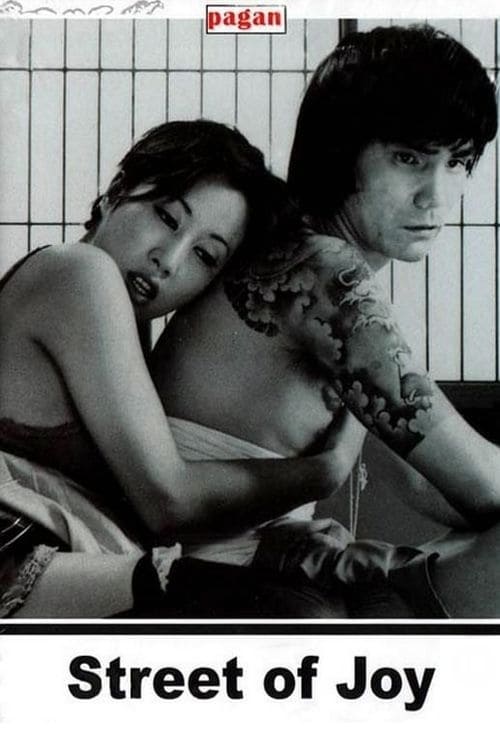
Street of Joy
1974
No user ratings available yet
Diversity score: 6.7 out of 10

1974
Director
Noboru Tanaka
Runtime
83 minutes
Average Rating
No ratings yetSynopsis
A strong-willed young prostitute, her mentally challenged brother, and her aging prostitute mother attempt to survive in 1970s Osaka.
Overall Score
Good
Category Breakdown
LGBTQ+ Representation
The film lacks explicit LGBTQ+ characters or narratives. The focus remains on a specific familial unit navigating socioeconomic survival rather than exploring non-heteronormative identities.
Gender Representation
The story centers on female agency and resilience. By portraying women in roles of economic and emotional labor, it subverts passive tropes and challenges traditional domestic femininity.
Racial & Ethnic Diversity
Set in 1970s Osaka, the film offers a culturally specific Japanese landscape. It prioritizes class-based identity and urban socioeconomic realities over multi-ethnic or racial intersectionality.
Religious & Cultural Diversity
The narrative critiques traditional institutions by centering on characters outside 'respectable' society. It frames conventional morality and family stability as potentially oppressive or insufficient.
Disability Representation
A mentally challenged brother is a central figure in the family dynamic. This inclusion allows for an exploration of neurodivergence within a high-pressure, survivalist environment.
Strengths
Areas for Improvement
AI Analysis
Noboru Tanaka’s work provides a gritty, naturalistic look at characters living on the periphery of society. The film succeeds in deconstructing traditional social hierarchies by focusing on the lived experiences of the marginalized. While the film excels in portraying gendered resilience and the complexities of neurodivergence, it lacks engagement with queer identities or multi-ethnic perspectives. The narrative is deeply rooted in a specific Japanese socioeconomic context. Ultimately, the film serves as a sophisticated critique of conventional societal structures, prioritizing the survival of a non-idealized family unit over institutionalized morality.
1974

2017

1962
1970

2000
1978

1956

1969

1971

1964

1980

1992
No reviews yet. Be the first to share your thoughts on this movie!
Use the rating form above to leave a star rating and optional review.