
The Price She Paid
1924
No user ratings available yet
Representation score: 0.6 out of 10
Representation Score
Minimal
1927
PassedDirector
Emory Johnson
Runtime
70 minutes
Average Rating
No ratings yetNew Showbiz Analysis
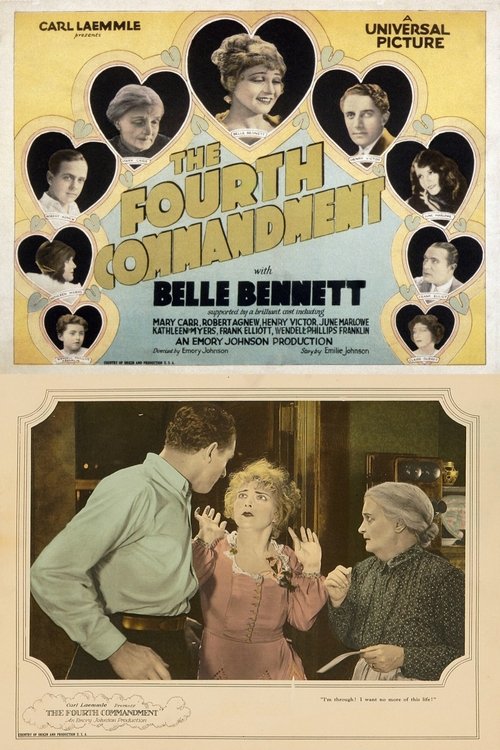
The Fourth Commandment is a conventional silent-era drama that adheres strictly to the social and demographic norms of 1927. The narrative revolves around a traditional romantic arc and class-based conflict, offering little in the way of systemic subversion or diverse perspectives. While the film features a female antagonist with clear ability to act and motivation, this role serves to drive a standard melodrama rather than challenge gender hierarchies. The focus on family fortunes and social ambition reinforces the era's preoccupation with class and status. Ultimately, the film presents a homogeneous view of American life that reflects the period's standard romantic and social clichés.
Category Breakdown
The film depicts a traditional romance between Gordon Graham and Marjorie Miller. There is no representation of same-sex relationships or non-binary gender identities.
Mrs. Miller is portrayed as a socially ambitious antagonist with a significant role in driving the story. However, the story relies on traditional gender roles and courtship structures.
The narrative focuses on the Graham and Miller families, indicating a homogeneous Anglo-Saxon social structure. There is no evidence of multi-ethnic casting.
The plot emphasizes class stability and social standing, reinforcing conventional social hierarchies without challenging Western institutions.
The film does not include any characters with visible or invisible disabilities.
Present on Screen
Limited or Absent
Official Synopsis
Following a reversal in the Graham family fortune, a childhood love affair between Gordon Graham and Marjorie Miller is frustrated by the socially ambitious Mrs. Miller.
1924

1920

1928
1927

1934

1935

1925

1930
No reviews yet. Be the first to share your thoughts on this movie!
Use the rating form above to leave a star rating and optional review.